






What's Happening?
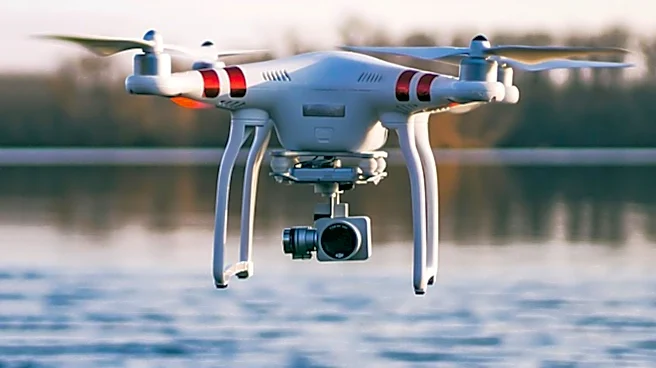
Michigan has chosen Kohtari to lead a drone-enabled water monitoring project in partnership with the Michigan Department of Environment, Great Lakes, and Energy (EGLE). This initiative is part of Michigan's Advanced Air Mobility (AAM) Statewide Challenge,
which is distributing $2 million across five projects to evaluate advanced aerial technologies in real-world public-sector applications. Kohtari will demonstrate its drone-enabled monitoring, sampling, and water intelligence technology to enhance water quality management in Michigan's Great Lakes region. The project aims to provide more frequent and location-specific data, enabling water quality teams to identify changes and predict emerging issues, such as harmful algal blooms (HABs), before they occur. Additionally, the project will utilize an artificial intelligence and machine learning platform to integrate fragmented environmental, operational, and monitoring data, pinpointing areas of water risk and their causes. This approach will allow for faster, safer, and more informed decision-making regarding water quality.
Why It's Important?
This project is crucial for improving environmental protection and public health in Michigan, particularly given the ecological and economic significance of the Great Lakes. Traditional water monitoring methods can be time-consuming, costly, and sometimes unsafe for human personnel, leading to less frequent data collection and reactive rather than proactive management. By deploying drones, Kohtari can access difficult-to-reach areas and collect data more rapidly and frequently, providing a more comprehensive and up-to-date picture of water quality. The integration of AI and machine learning is particularly important as it transforms raw data into actionable insights, allowing for the prediction of issues like HABs, which can have severe impacts on aquatic ecosystems, tourism, and human health. This proactive approach can mitigate environmental damage, protect drinking water sources, and support the state's economy. If successful, this model could be replicated in other waterways across Michigan and potentially other states facing similar water quality challenges.
What's Next?
During the project, Kohtari will work closely with EGLE to demonstrate the effectiveness of its drone-powered system in collecting live, location-tagged water quality readings. A key focus will be on using the AI and machine learning platform to predict harmful algal blooms before they manifest. The project also involves Detroit-based NextEnergy, which will help accelerate the deployment of these smart, clean solutions, and additional industry partners will support specialized drone operations. The outcomes of this demonstration will be critical in evaluating whether this advanced aerial technology approach can be scaled and applied to other Michigan waterways. Success in this pilot could lead to broader adoption of drone-enabled monitoring and AI-driven data analysis in water management across the state, setting a precedent for how environmental agencies leverage cutting-edge technology for resource protection.
Beyond the Headlines
This initiative represents a significant step in the broader trend of integrating advanced technologies, such as drones and artificial intelligence, into environmental management. It highlights a shift from traditional, labor-intensive monitoring to more efficient, data-driven, and predictive approaches. Beyond the immediate benefits to water quality, this project could foster innovation in the drone and AI sectors, creating new economic opportunities and skilled jobs. It also raises important considerations regarding data privacy, the ethical use of AI in public services, and the need for robust regulatory frameworks to govern drone operations in environmental contexts. The success of such projects can serve as a model for other states and countries grappling with environmental challenges, demonstrating how technological innovation can be harnessed to achieve sustainable resource management and enhance public well-being. It underscores the growing importance of interdisciplinary collaboration between government, industry, and technology providers to address complex environmental issues.