



What's Happening?
South Korea is advancing plans to initiate regular trans-Arctic shipping, aiming to become the first Western-aligned nation to utilize Russia's Northern Sea Route for global trade enhancement. President Lee Jae-myung has emphasized the strategic importance
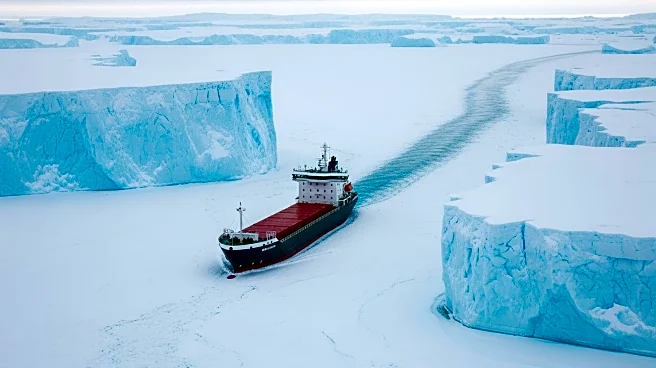
of this route in strengthening South Korea's economic ties. The Ministry of Oceans and Fisheries, led by Acting Minister Kim Sung-bum, is spearheading the development of this initiative. A trial voyage is scheduled for September, coinciding with minimal ice conditions in the Arctic. The government plans to launch a tender for a 5,000 YEU-class vessel to undertake this journey, which will reduce the distance and transit time between Busan and Rotterdam significantly. This marks South Korea's first complete Arctic transit, following previous partial transits with bulkers.
Why It's Important?
The trial voyage represents a significant step for South Korea in enhancing its global trade capabilities and competing with China, which has already established seasonal services along the Northern Sea Route. By reducing transit time and distance, South Korea aims to improve trade efficiency and economic competitiveness. However, the plan faces challenges, including potential diplomatic hurdles due to Western sanctions against Russia. The initiative also involves financial considerations, such as higher insurance costs for the voyage, which the government plans to offset with incentives. Successfully establishing this route could position South Korea as a key player in Arctic shipping, potentially reshaping global trade routes.
What's Next?
The next steps involve selecting a suitable vessel and negotiating with Russia for passage permits. The South Korean government is also considering financial incentives to mitigate the high insurance costs associated with Arctic shipping. Discussions with Russian authorities are crucial, given the geopolitical complexities and existing sanctions. If successful, this trial could pave the way for regular summer voyages, enhancing South Korea's trade routes and economic influence. The outcome of these negotiations and the trial voyage will likely influence future policy decisions and international trade dynamics.