






What's Happening?
NASA astronauts Reid Wiseman, Victor Glover, and Christina Koch, along with Canadian Space Agency's Jeremy Hansen, prepared for the Artemis II mission in Colorado's Rocky Mountains. The training involved a partnership with the Colorado National Guard
at the High-Altitude Army National Guard Aviation Training Site in Gypsum. The region's thin air and varied landscapes provide conditions similar to the moon, aiding in lunar landing and flight procedure practice. The Artemis II mission marks the first human-crewed flight in NASA's Artemis program, aiming to reestablish frequent human travel to the moon and future missions to Mars. The mission's primary goal is to test the Orion spacecraft and its systems in deep space, setting a foundation for future Artemis flights.
Why It's Important?
The Artemis II mission represents a significant step in NASA's efforts to return humans to the moon and eventually Mars. By utilizing Colorado's unique environment for training, NASA can simulate lunar conditions, enhancing astronaut preparedness for future missions. This initiative not only advances space exploration but also highlights Colorado's role in the aerospace industry, with over 200 local companies contributing to the mission. The successful execution of Artemis II could pave the way for more frequent lunar missions, potentially leading to new scientific discoveries and technological advancements.
What's Next?
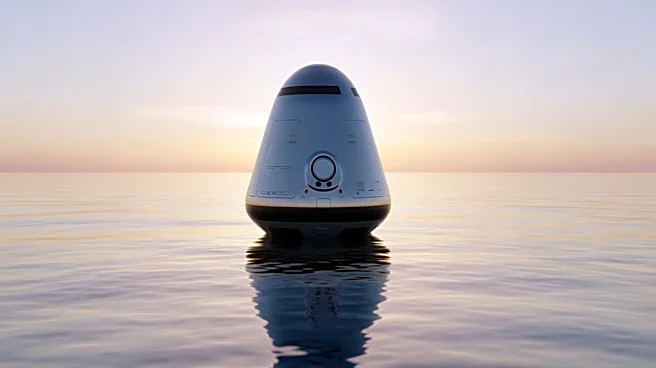
Artemis II is expected to conclude with a splashdown off the coast of San Diego. As NASA continues to develop the Artemis program, future missions, including Artemis III, are planned to land on the moon's surface. The ongoing collaboration with Colorado's aerospace sector will likely continue, supporting the development of technologies and training protocols essential for lunar and Mars exploration. NASA's regular updates and live-streams of the Artemis II flight provide transparency and engagement with the public, fostering interest in space exploration.
Beyond the Headlines
The Artemis program's reliance on Colorado's aerospace capabilities underscores the state's importance in the national space industry. The training in Colorado not only prepares astronauts for lunar missions but also contributes to the local economy and technological innovation. As NASA progresses with its Artemis missions, the ethical and environmental implications of space exploration, such as resource utilization and planetary protection, will become increasingly relevant. The program's success could inspire future generations to pursue careers in STEM fields, further advancing the U.S.'s leadership in space exploration.