





What's Happening?
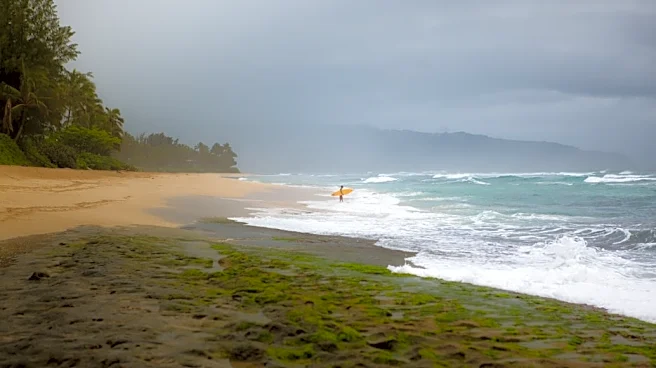
Residents of Kalaupapa, Hawaii, including patients and staff, have been temporarily relocated to a care home on Oʻahu following the failure of both the primary and secondary drinking water systems. According to Nancy Holman, superintendent of Kalaupapa National
Historical Park, the primary system experienced issues, and while efforts were underway to address it, the secondary system also failed. This dual failure led the state Department of Health to initiate the temporary relocation. Water restrictions were initially implemented, but the inability to sustain water supply for residential houses necessitated the evacuation. Repairs are currently in progress, with diagnostic and repair cycles ongoing for various components of the water system. This marks the first time both systems have failed simultaneously, despite regular maintenance, and the first time residents have had to leave the peninsula for an extended period due to such an issue.
Why It's Important?
The temporary relocation of Kalaupapa residents due to water system failures highlights critical infrastructure vulnerabilities in remote U.S. communities. This incident underscores the challenges of maintaining essential services in isolated areas, where access to specialized equipment and personnel can significantly delay repairs. For the Kalaupapa community, many of whom are patient residents, the disruption to their daily lives and the need for relocation to Oʻahu represent a significant impact on their well-being and stability. The reliance on a single well-based system, installed in 1985 to ensure consistent water quality, now presents a single point of failure risk. This situation could prompt broader discussions on infrastructure resilience and contingency planning for remote U.S. territories and national parks, especially concerning vital resources like potable water. The event also brings to light the unique needs and vulnerabilities of historical settlements and their inhabitants.
What's Next?
Repairs to Kalaupapa's drinking water system are ongoing, with officials working through diagnostic and repair cycles for various components. Nancy Holman expressed hope for repairs to be completed early next week, though she noted that the remote nature of the site could extend this timeline due to challenges in acquiring specialized equipment, personnel, and parts. Once the water system is fully operational and deemed safe, the patient residents and staff will be able to return to the settlement. Beyond the immediate repairs, the incident may lead to a re-evaluation of long-term infrastructure strategies for Kalaupapa. While a tertiary water system or alternative water source is not currently an option, the prolonged disruption could prompt further studies into enhancing the resilience of the existing system or exploring new solutions to prevent similar widespread outages in the future. The Department of Health and National Park Service will likely continue to monitor the situation closely.
Beyond the Headlines
The Kalaupapa water crisis extends beyond a simple infrastructure failure, touching upon the unique historical and social fabric of the settlement. Kalaupapa is a place of profound historical significance, primarily known as a former Hansen's disease (leprosy) settlement, and its residents often have deep personal connections to the land. The forced relocation, even if temporary, can have significant emotional and psychological impacts on a community that has historically faced isolation and displacement. This event also highlights the broader issue of resource allocation and infrastructure investment in U.S. national parks and remote historical sites. Ensuring the well-being of residents in such unique communities requires a delicate balance between preserving historical integrity and providing modern, reliable essential services. The incident could serve as a case study for other remote U.S. communities grappling with aging infrastructure and the challenges of maintaining self-sufficiency in isolated environments.