






What's Happening?
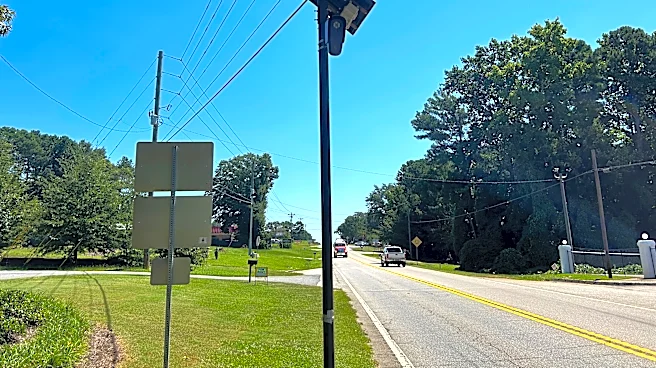
The Greenville Police Department (GPD) has decided to abandon its plans to implement Flock Safety automated license plate reader (ALPR) cameras. This decision came after significant feedback from the community, City Council, and the City Manager’s Office,
which raised concerns about privacy and data access. In early July, GPD had announced intentions to purchase and install 10 Flock cameras along major entry and exit routes of the city to assist in crime solving, vehicle recovery, and locating missing persons. However, none of these cameras were installed. The reversal follows a packed City Council meeting on August 24, where numerous residents voiced opposition to the technology. Jeanette Doran, Chief Legal Officer at the John Locke Foundation, supported Greenville's decision, emphasizing that while the cameras can aid law enforcement, the routine recording of thousands of innocent people's movements presents fundamental surveillance and privacy issues.
Why It's Important?
This decision by the Greenville Police Department highlights a growing national debate regarding the balance between public safety and individual privacy in the context of advanced surveillance technologies. The rejection of Flock cameras in Greenville, North Carolina, reflects increasing public scrutiny and calls for accountability from law enforcement agencies regarding data collection and usage. The incident in Brunswick County, where a sheriff's office member resigned due to alleged misuse of their Flock system, and the arrests of two other North Carolina officers for similar offenses, underscore the potential for abuse and the need for robust safeguards. This situation could set a precedent for other municipalities considering similar technologies, encouraging them to prioritize community input and privacy concerns over immediate technological adoption. It also signals a critical opportunity for state lawmakers to establish clear, enforceable regulations for ALPR systems, addressing issues of access, retention, sharing, and auditing of data to prevent misuse and protect civil liberties.
What's Next?
The Greenville Police Department will not proceed with the installation of Flock cameras, and any existing cameras in the area are either privately owned or operated by other law enforcement agencies. This decision is likely to encourage other communities in North Carolina and across the U.S. to engage in similar public discussions and potentially reconsider their own plans for ALPR technology. Jeanette Doran of the John Locke Foundation suggests that this is a crucial moment for the North Carolina legislature to develop comprehensive standards for ALPR systems, focusing on access, search protocols, data retention, sharing policies, and auditing mechanisms. Such legislative action would aim to ensure that technology serves public safety without infringing on privacy rights, moving beyond internal police policies to establish state-level protections. The ongoing investigations into alleged misuses of Flock cameras by officers in Brunswick County, Charlotte-Mecklenburg, and Mooresville will also continue to shape public and legislative perspectives on these surveillance tools.
Beyond the Headlines
The Greenville PD's decision to halt the Flock camera rollout delves into the deeper societal implications of pervasive surveillance and the erosion of privacy in an increasingly digital world. Beyond the immediate concerns of crime fighting, the debate touches upon fundamental constitutional rights and the potential for a 'surveillance society' where every movement is tracked and recorded. The public's strong reaction in Greenville underscores a growing awareness and demand for transparency and control over personal data, challenging the notion that technological advancements automatically equate to improved public safety. This case also highlights the ethical dilemma faced by law enforcement: how to leverage technology for crime prevention while upholding democratic values and individual freedoms. The call for legislative intervention at the state level reflects a recognition that current legal frameworks may be insufficient to address the complexities introduced by modern surveillance tools, necessitating a proactive approach to safeguard civil liberties against potential technological overreach.