







What's Happening?
A report by the League of United Latin American Citizens (LULAC) highlights that Latino communities are disproportionately affected by federal immigration enforcement under the Trump administration. The report, citing a UCLA study, states that from January
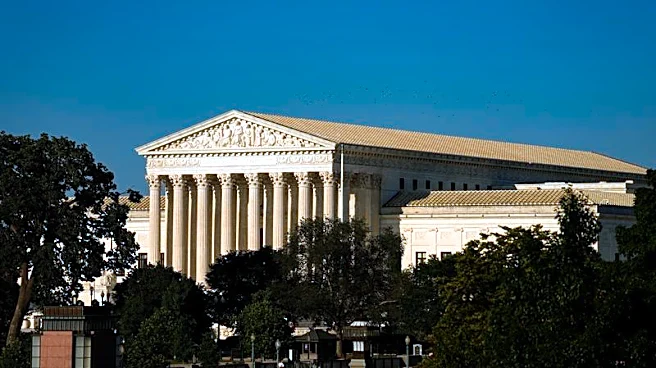
to October, over 187,000 Latinos were arrested and more than 126,000 deported. The increase in arrests followed a new goal set by Stephen Miller, a senior advisor to President Trump, to arrest 3,000 undocumented individuals daily. The Department of Homeland Security has rejected the report's findings, asserting that enforcement is based on legal status rather than race or ethnicity. The report also notes that the Supreme Court's decision to lift an injunction has led to increased raids in Latino communities, affecting U.S. citizens and legal residents.
Why It's Important?
The findings underscore significant concerns about racial profiling and the impact of immigration policies on Latino communities, which include U.S. citizens and legal residents. The report suggests that these policies are not only affecting undocumented immigrants but also causing economic and social harm to broader Latino communities. This has implications for civil rights and the perception of law enforcement practices in the U.S. The economic impact is also notable, with Latino businesses experiencing reduced foot traffic and revenue losses. The report raises questions about the balance between immigration enforcement and civil liberties, and the potential for racial bias in policy implementation.
What's Next?
The report may prompt further scrutiny and debate over immigration policies and their implementation. Civil rights organizations and lawmakers may call for investigations or legislative changes to address the concerns raised. The Department of Homeland Security's response indicates a potential for continued legal and public relations battles over the issue. Additionally, the economic impact on Latino communities may lead to calls for support and intervention to mitigate the negative effects.