



What's Happening?
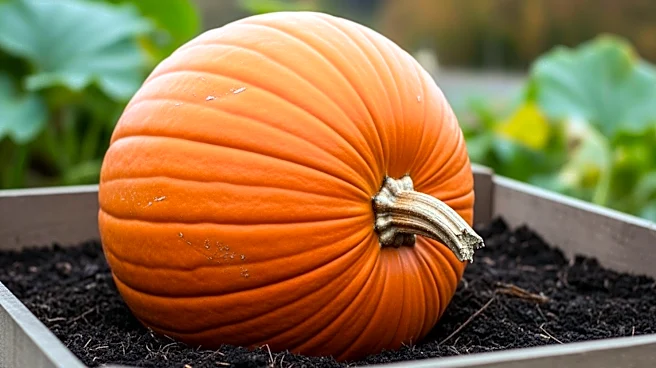
The Goliat van Gat pumpkin festival, held at Pretoria's Lavender Kontrei Market, showcased a massive 653kg pumpkin grown by Wykus Lamprecht, marking a significant event in the 22nd annual heaviest pumpkin competition. This year's festival saw the largest
number of entries, with a total weight of 4,342kg of pumpkins. The event not only celebrated the impressive size of the pumpkins but also contributed to local welfare organizations by donating all the pumpkins to assist less privileged communities. The festival attracted approximately 2,500 visitors, highlighting its popularity and community impact.
Why It's Important?
The Goliat van Gat pumpkin festival plays a crucial role in supporting local communities by providing food to those in need. The donation of over 4,000kg of pumpkins to welfare organizations demonstrates a significant contribution to food security in the Pretoria area. Additionally, the festival promotes agricultural innovation and community engagement, encouraging local growers to participate in international competitions. This event not only boosts local morale but also places South African growers on the global stage, fostering a sense of pride and achievement within the community.
What's Next?
Following the success of this year's festival, organizers plan to continue supporting local communities through future events. The seeds from the winning pumpkins will be distributed to growers, along with guidelines for cultivating giant pumpkins, ensuring the continuation of this tradition. The festival's registration with the Great Pumpkin Commonwealth allows South African growers to compete internationally, potentially increasing their visibility and opportunities for collaboration with global agricultural communities.
Beyond the Headlines
The Goliat van Gat festival highlights the potential for agricultural events to address social issues such as food insecurity. By combining competition with community service, the festival sets a precedent for how agricultural initiatives can have a broader societal impact. This model could inspire similar events in other regions, promoting sustainable practices and community involvement in agriculture.