





What's Happening?
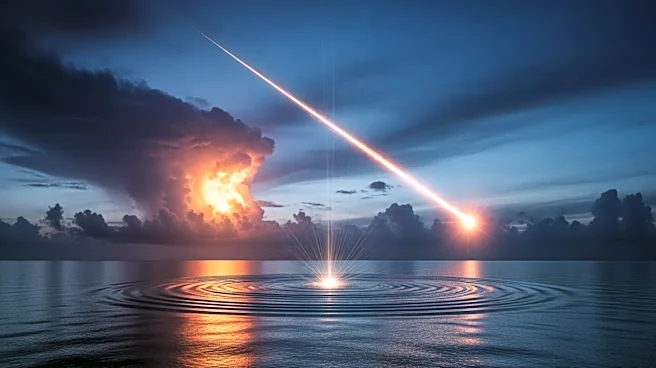
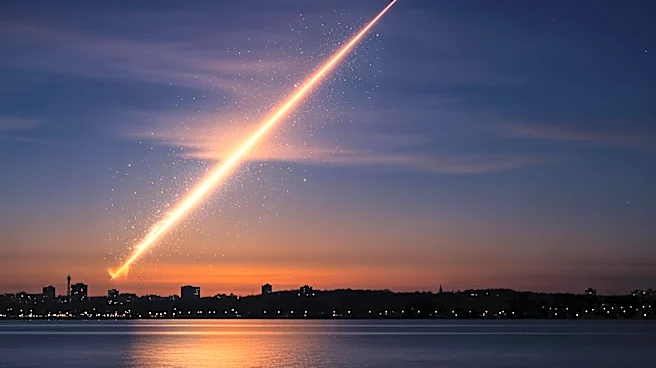
NASA has confirmed that a loud sonic boom heard across the northeastern United States was caused by a meteor explosion. The event occurred on May 30 at 2:06 p.m. EDT and was detected by the GOES-19 satellite from the National Oceanic and Atmospheric Administration
(NOAA). The meteor fragmented at an altitude of 40 miles over northeastern Massachusetts and southeastern New Hampshire, releasing energy equivalent to 300 tons of TNT. This explosion was not associated with any known meteor shower, according to NASA. The meteor's flash was captured by the GOES-19 geostationary lightning mapper, and the event was widely reported by eyewitnesses to the American Meteor Society.
Why It's Important?
The meteor explosion highlights the potential impact of space objects entering Earth's atmosphere. Such events, while rare, can cause significant noise and ground shaking, as experienced by residents in the northeastern U.S. The energy released by this meteor was substantial, equivalent to a large conventional explosive. Understanding these occurrences is crucial for improving predictive models and preparing for potential future impacts. The event also underscores the importance of satellite monitoring systems like NOAA's GOES-19, which provide critical data for identifying and analyzing atmospheric phenomena.
What's Next?
While the meteor pieces fell into Cape Cod Bay, making recovery unlikely, the event will likely prompt further study by NASA and other scientific organizations. Researchers may focus on improving detection and tracking systems for meteors and other near-Earth objects. Additionally, the incident may lead to increased public interest in meteor science and the potential risks posed by space debris. Future efforts may include enhanced public education on what to do in the event of similar occurrences.