




What's Happening?
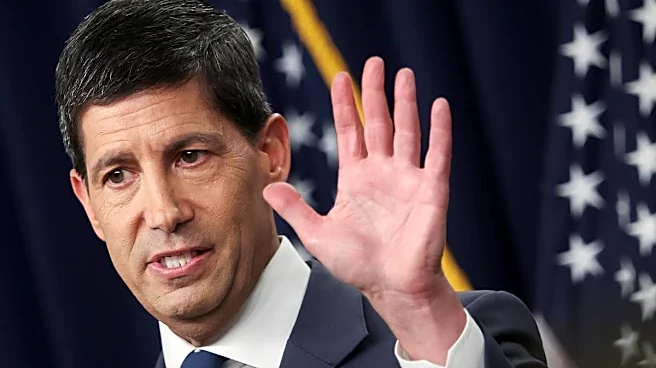
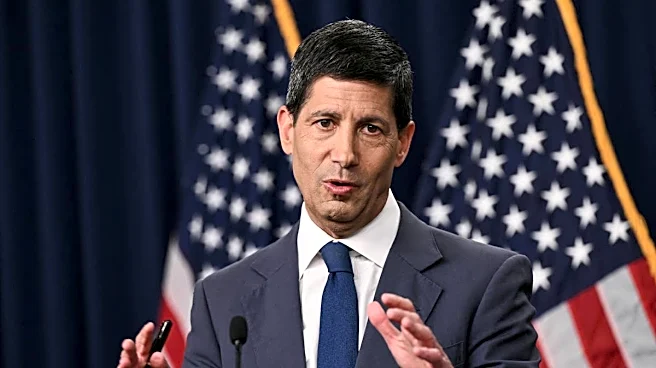
President Trump's repeated calls for sharp interest rate cuts and threats against the Federal Reserve are creating a credibility challenge for current Fed Chair Kevin Warsh. President Trump has publicly stated that the U.S. should have the lowest interest rates
globally and has threatened to halt trade with countries if the Fed does not comply. This pressure comes despite strong economic indicators, such as robust August payroll gains, which typically suggest a need for rate adjustments to manage inflation. Warsh, appointed by President Trump, has been perceived as leaning hawkish in his recent Jackson Hole speech, suggesting a potential rate hike. This situation puts Warsh in a difficult position, as he must balance the Fed's independent mandate with the President's public demands.
Why It's Important?
The ongoing political pressure from President Trump on the Federal Reserve is critical because it threatens the central bank's independence, a cornerstone of its effectiveness and credibility. If the Fed is perceived as being swayed by political motives rather than economic data, it could undermine investor confidence, lead to market instability, and compromise the Fed's ability to manage inflation and maintain economic stability. For Chair Warsh, asserting the Fed's independence through a rate hike, despite presidential opposition, could bolster his credibility and the institution's integrity. Conversely, succumbing to pressure could set a dangerous precedent, making the Fed more susceptible to political interference in the future. This dynamic has significant implications for U.S. economic policy and its global standing.
What's Next?
The immediate focus will be on the Federal Reserve's upcoming policy decisions, particularly regarding interest rates. A rate hike by Chair Warsh could be seen as a move to assert the Fed's independence and commitment to its inflation target, potentially drawing further criticism from President Trump. The market will closely watch President Trump's reactions and any subsequent statements, as his past responses have been highly vocal. The situation also highlights the broader challenge for central banks worldwide to maintain autonomy in an increasingly politicized global economic environment. The long-term implications could involve a re-evaluation of the relationship between the executive branch and independent financial institutions.
Beyond the Headlines
The tension between President Trump and Federal Reserve Chair Warsh exposes a fundamental conflict between political expediency and sound economic policy. President Trump's desire for lower rates, while potentially aimed at short-term economic boosts, could lead to long-term inflationary pressures and economic instability if not balanced by independent monetary policy. This situation also raises questions about the public's understanding of the Fed's role and the importance of its independence. The debate extends beyond mere interest rates to the very structure of economic governance in the U.S., highlighting the delicate balance required to ensure both democratic accountability and expert decision-making in financial matters. The outcome of this power struggle could redefine the boundaries of presidential influence over independent institutions.