


What's Happening?
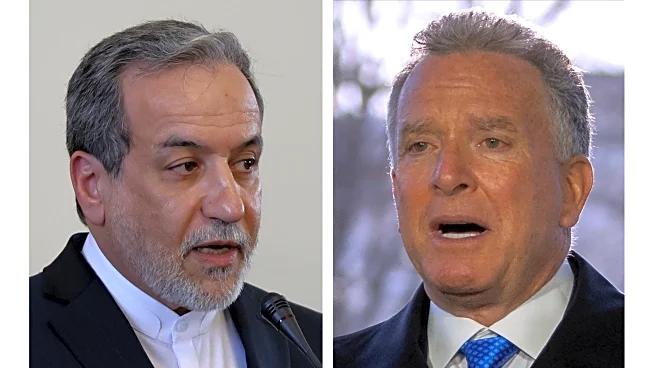
Iranian President Masoud Pezeshkian and Foreign Minister Abbas Araghchi have reiterated Iran's stance on its nuclear program, emphasizing their right to uranium enrichment. This declaration follows recent nuclear talks between the United States and Iran in Oman,
which Pezeshkian described as a 'step forward.' Both leaders stressed that Iran's nuclear activities are a matter of national sovereignty and should not be dictated by other nations. Araghchi highlighted the importance of diplomacy, stating that it must respect Iran's inherent rights under the Non-Proliferation Treaty. He also underscored Iran's resistance to foreign influence, asserting that their 'nuclear bomb is the power of saying no to the great powers.' The talks in Oman were facilitated by friendly regional governments, according to Pezeshkian.
Why It's Important?
The statements by Iranian leaders underscore the ongoing tension between Iran and Western nations over nuclear capabilities. Iran's insistence on its right to nuclear activities could complicate diplomatic efforts aimed at curbing nuclear proliferation in the region. The emphasis on sovereignty and resistance to foreign pressure reflects a broader geopolitical struggle, where Iran seeks to assert its independence and influence. This development is significant for U.S. foreign policy, as it impacts negotiations aimed at preventing nuclear escalation. The outcome of these talks could affect regional stability and international relations, particularly with countries concerned about nuclear proliferation.
What's Next?
The continuation of diplomatic talks between the U.S. and Iran is likely, as both sides seek to find common ground. However, Iran's firm stance on its nuclear rights suggests that negotiations may face significant challenges. The international community, particularly countries involved in the Non-Proliferation Treaty, will be closely monitoring these developments. Potential reactions from other regional powers, such as Israel, which has expressed concerns over Iran's nuclear ambitions, could influence the diplomatic landscape. The U.S. may need to balance its approach, considering both diplomatic engagement and strategic pressure to achieve its non-proliferation goals.