




What's Happening?
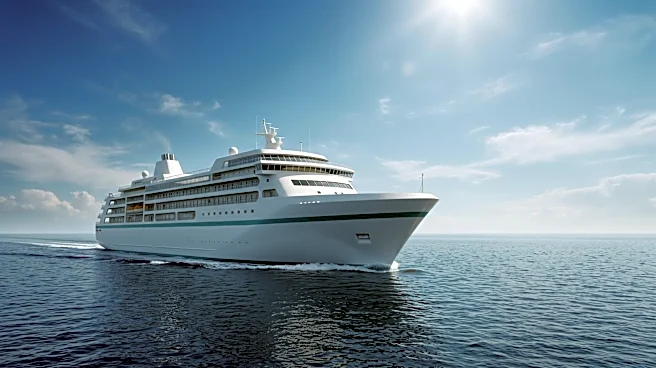
Mercy Ships International has renewed its service agreement with Wärtsilä for the Global Mercy, the world's largest purpose-built civilian hospital ship, and added a new service agreement for its upcoming sister vessel, Africa Mercy II. These agreements
integrate Wärtsilä's Expert Insight digital predictive maintenance service into a broader ship management package that includes spare parts, field services, and crew training. The Expert Insight system utilizes advanced analytics and artificial intelligence to identify potential machinery issues before they lead to operational interruptions. The renewal for Global Mercy is a five-year agreement, while the Africa Mercy II, currently under construction and slated for delivery in 2028, will have a three-year service agreement. Both vessels are powered by Wärtsilä engines, with Global Mercy specifically using four Wärtsilä 32 engines, each producing 3,360 kW, which are crucial for both propulsion and the extensive onboard hospital operations.
Why It's Important?
The reliability of these hospital vessels is paramount for Mercy Ships' mission, which involves providing free surgery, medical training, and healthcare services to underserved communities in Africa. Unexpected disruptions or machinery failures could severely impact their ability to deliver critical medical care, making vessel availability a direct determinant of their service delivery capacity. By leveraging Wärtsilä's predictive maintenance technology, Mercy Ships aims to enhance operational reliability, minimize unplanned downtime, and improve maintenance planning. This proactive approach ensures that the vessels remain operational, allowing medical professionals to focus on their humanitarian work without the added burden of unforeseen technical issues. The integration of digital monitoring into the overall maintenance strategy signifies a shift towards data-driven decision-making in critical maritime operations, ensuring sustained humanitarian efforts.
What's Next?
The renewed agreement for Global Mercy and the new agreement for Africa Mercy II will ensure continued operational reliability for Mercy Ships' fleet. The Africa Mercy II is scheduled for delivery in 2028, and its machinery support framework is being established well in advance of its entry into service. This proactive setup aims to guarantee smooth operations from the outset. Wärtsilä will continue to provide spare parts, field services, and crew training, alongside its digital predictive maintenance service. This ongoing collaboration is expected to further refine the application of advanced analytics and AI in maritime maintenance, potentially setting new standards for operational efficiency and reliability in humanitarian vessel operations. The focus will be on continuously leveraging data to prevent issues and optimize maintenance schedules.
Beyond the Headlines
The adoption of advanced predictive maintenance technologies by humanitarian organizations like Mercy Ships highlights a broader trend of integrating cutting-edge industrial solutions into non-profit and public service sectors. This move underscores the critical role of technology in enhancing the effectiveness and sustainability of humanitarian aid. Beyond the immediate operational benefits, the use of AI and advanced analytics in maintaining complex machinery on hospital ships can serve as a model for other organizations operating in challenging environments. It also raises questions about the long-term implications of such technological dependencies and the need for robust training and infrastructure to support these systems in remote locations. The success of this partnership could encourage wider adoption of similar technologies in other critical infrastructure projects globally, emphasizing the ethical imperative of ensuring continuous service delivery in life-saving missions.