


What's Happening?
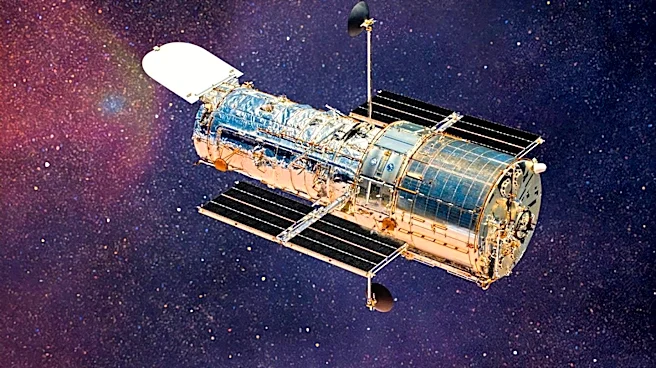
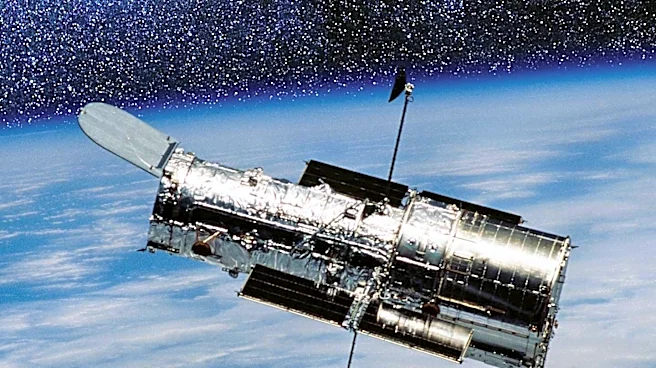
NASA's Hubble Space Telescope and the James Webb Space Telescope have captured detailed, complementary views of the Cat's Head Nebula, a star-forming region within the larger Carina Nebula, located approximately 7,500 light-years from Earth. Hubble's
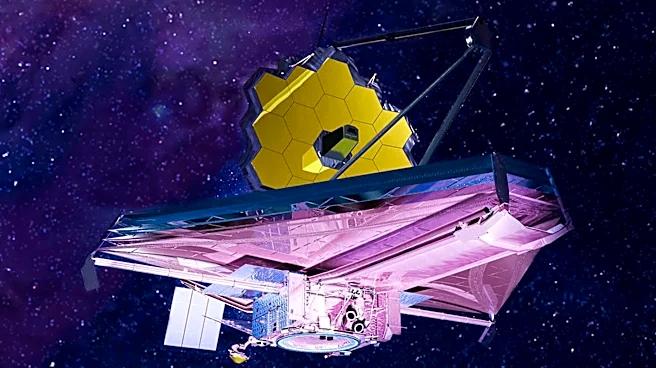
visible-light observations show the nebula as a dark brown, opaque dust pillar with a glowing red 'eye,' which is likely a young star embedded in the dust. The right side of the nebula features a hazy yellow outline, indicating an ionized rim where photoevaporation is occurring due to energetic ultraviolet light. In contrast, Webb's infrared observations penetrate the dust, revealing faint background dust pillars, numerous stars, and intricate structures outlined by warm dust and carbon-based molecules. The combined imagery from both telescopes provides a more comprehensive understanding of the complex processes involved in star formation within this temporary celestial scene.
Why It's Important?
The collaborative observations by the Hubble and James Webb Space Telescopes are crucial for advancing our understanding of star formation, a fundamental process in astrophysics. By providing both visible and infrared perspectives, the telescopes offer unique insights into how gas and dust clouds evolve into stars. Hubble's view highlights the visible structures and the effects of stellar radiation on the nebula's shape, while Webb's ability to pierce through dust reveals hidden details and nascent stars that would otherwise be obscured. This dual approach allows scientists to study different stages and aspects of star formation, contributing to a more complete picture of cosmic evolution. The data gathered from such observations helps refine theoretical models of stellar birth and the dynamics of nebulae, impacting the broader field of astronomy and our knowledge of the universe's origins.
What's Next?
The ongoing analysis of the Cat's Head Nebula data from both Hubble and Webb will continue to provide valuable information for astronomers. Scientists will further investigate the interplay between the intense ultraviolet radiation from massive stars and the erosion of surrounding gas and dust, which sculpts the nebula's distinctive shape. Future research will likely focus on the properties of the embedded young stars and the composition of the dust and gas, particularly the carbon-based molecules detected by Webb. This research will contribute to a deeper understanding of the conditions necessary for star formation and the lifespan of such nebulae. The insights gained will also inform future observations with other advanced telescopes, potentially leading to new discoveries about star-forming regions across the cosmos.
Beyond the Headlines
The combined imaging capabilities of the Hubble and James Webb Space Telescopes represent a significant leap in astronomical observation, allowing for a multi-wavelength approach to studying cosmic phenomena. This synergy between visible and infrared astronomy provides a more holistic view of the universe, revealing layers of information that a single telescope could not capture. The detailed images of the Cat's Head Nebula underscore the importance of international cooperation in space exploration, with both NASA and ESA contributing to these missions. Beyond scientific discovery, these breathtaking images inspire public interest in science and space, fostering a greater appreciation for the universe and encouraging future generations to pursue careers in STEM fields. The continuous flow of data from these telescopes ensures that our understanding of the universe is constantly evolving and expanding.