






What's Happening?
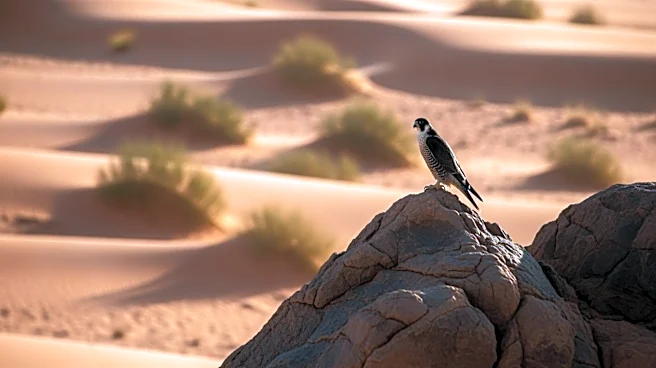
In the Judean Desert, a rare desert falcon that escaped captivity has been observed thriving in the wild, raising a family. During a survey by the Israel Nature and Parks Authority, inspectors discovered the falcon, which bore signs of captivity, such
as leather straps on its legs. Despite these marks, the falcon has successfully adapted to its natural environment, found a mate, and is raising chicks. This species, considered endangered with fewer than 50 nesting pairs in Israel, is a key indicator of ecosystem health. The falcon's survival and reproduction in the wild highlight the resilience of wildlife when given the opportunity to recover.
Why It's Important?
The falcon's story underscores the impact of human activities, such as illegal falconry, on wildlife populations. It also highlights the potential for recovery when animals are returned to their natural habitats. The presence of the falcon and its family indicates a functioning ecosystem, essential for maintaining biodiversity. This case draws attention to the ongoing threats faced by endangered species and the importance of conservation efforts. The successful adaptation of the falcon serves as a reminder of the need to protect natural habitats and enforce laws against wildlife exploitation.