







What's Happening?
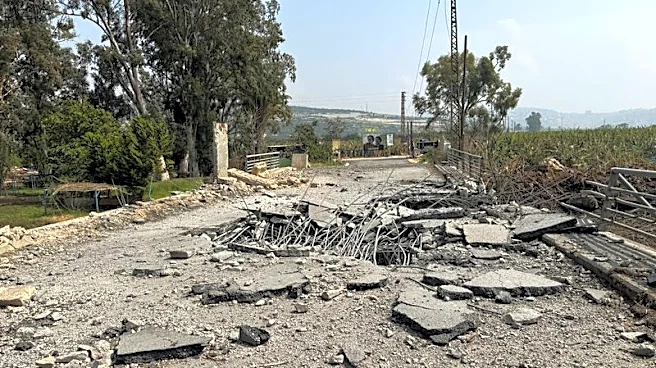
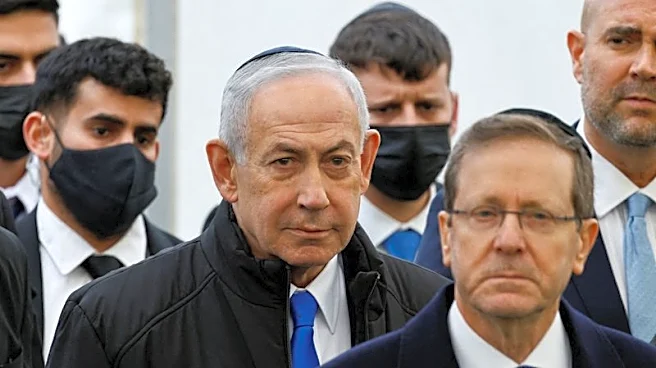
Israeli Agriculture Minister Avi Dichter has publicly stated that Israel's actions in Lebanon are constrained by U.S. considerations, linking the Lebanese issue to the broader Iranian nuclear threat. In an interview, Dichter highlighted that Israel's policy
in Lebanon is not independent but is influenced by its strategic partnership with the United States. This statement contrasts with Prime Minister Benjamin Netanyahu's earlier remarks, where he claimed that Israel retains full freedom to counter threats in Lebanon, including operations beyond the Litani River. Dichter criticized the previous Israeli government's maritime border agreement, arguing it weakened Israel's deterrence by conceding sovereign territory without achieving peace.
Why It's Important?
The differing statements from Israeli leaders underscore the complexity of Israel's geopolitical strategy in the region, particularly concerning its relationship with the United States and its stance on Iran. The U.S. plays a crucial role in shaping Israel's actions in Lebanon, as it is a key partner in addressing the Iranian nuclear threat. This dynamic affects not only Israel's security policies but also its diplomatic relations and regional stability. The criticism of past agreements and the acknowledgment of constraints highlight the challenges Israel faces in balancing national security interests with international alliances.
What's Next?
Future developments may include further diplomatic discussions between Israel and the U.S. to align their strategies on Lebanon and Iran. The potential for internal conflict within Lebanon, as suggested by Dichter, could also impact Israel's security policies and its approach to regional threats. Additionally, the Israeli government may face domestic pressure to reassess its agreements and strategies to ensure national security while maintaining international partnerships.