






What's Happening?
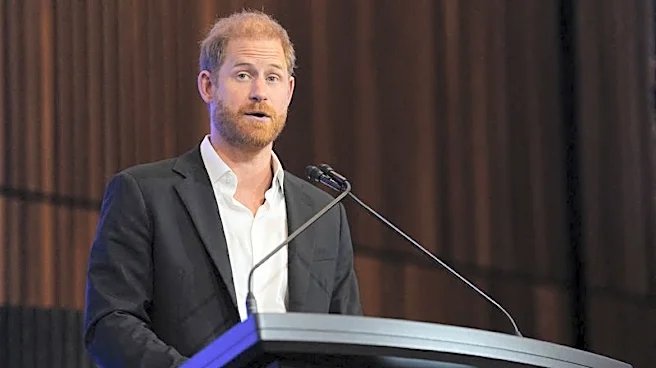
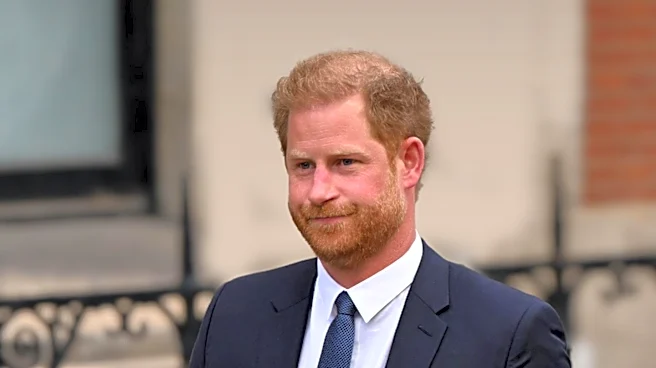
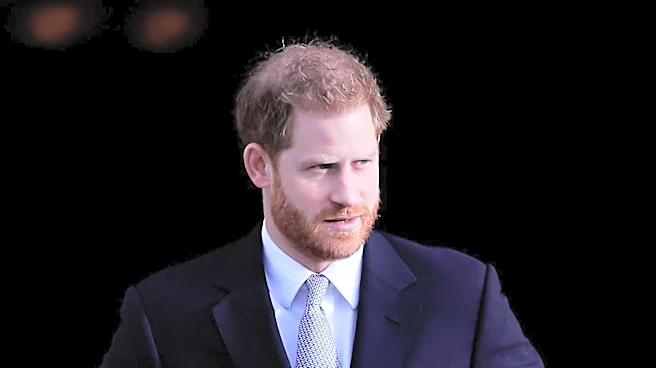
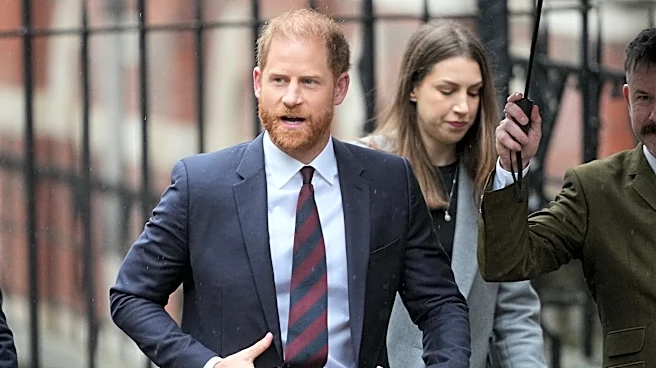
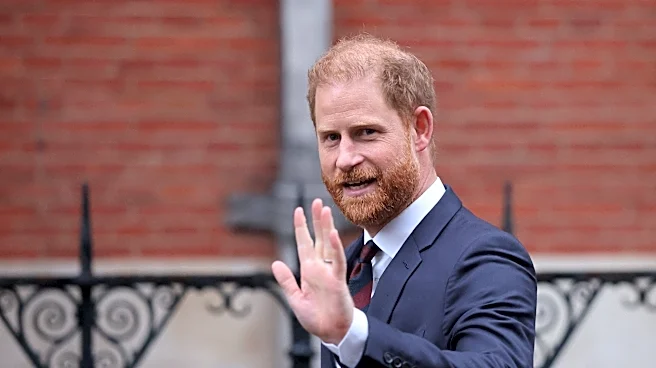
Prince Harry's lawsuit against Associated Newspapers Ltd., the publisher of the Daily Mail, was dismissed by Justice Matthew Nicklin. The Duke of Sussex had accused the publisher of unlawful activities, claiming that his privacy was invaded through articles
based on illegitimate sources. However, the judge found insufficient evidence to support these claims, suggesting that the information could have come from legitimate sources. This ruling marks a significant defeat for Prince Harry, who has been involved in multiple legal battles against the British press. The case involved other high-profile claimants, including Elton John and Elizabeth Hurley, and sought substantial damages. The dismissal could result in a hefty legal bill for the claimants, estimated at around $53.5 million.
Why It's Important?
The dismissal of Prince Harry's lawsuit underscores the challenges public figures face in proving privacy invasion claims against media outlets. This case highlights the ongoing tension between the British royal family and the press, a relationship that has been fraught with conflict, particularly for Prince Harry. The ruling may embolden media organizations, reinforcing their defense of using lawful sources for stories. It also reflects the broader legal landscape where claimants must provide substantial evidence to support allegations of unlawful information gathering. The outcome could influence future privacy lawsuits, potentially discouraging similar claims without concrete evidence.
What's Next?
Following the dismissal, Prince Harry and the other claimants may consider appealing the decision, although the lack of evidence could make this challenging. The ruling may prompt a reassessment of legal strategies in ongoing and future cases against media outlets. For the British press, this victory could lead to more assertive reporting, knowing that the courts require strong evidence for privacy invasion claims. The case also raises questions about the balance between press freedom and individual privacy, a debate likely to continue in the UK and beyond.