





What's Happening?
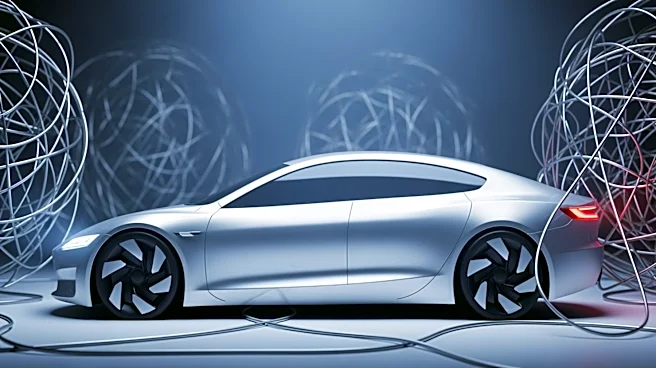
Formula 1 President and CEO Stefano Domenicali has expressed concerns over the pressure European politicians have placed on automakers to transition to electric vehicles. Domenicali argues that the push for electrification, while successful in some areas,
has created significant challenges for original equipment manufacturers (OEMs). The automotive industry, particularly in Europe, faces difficulties due to the end of globalization, ongoing tariffs, and rising competition from China. Domenicali highlights that the unrealistic expectation for the global vehicle fleet to fully transition to electric power has placed European automakers in a precarious position. This situation has also impacted Formula 1, which relies heavily on manufacturer involvement. Domenicali suggests that sustainable fuels could be a potential path forward, allowing Formula 1 to reconsider the extent of electrification necessary.
Why It's Important?
The push for electrification in the automotive industry is a critical issue as it affects the competitiveness and sustainability of automakers, particularly in Europe. The challenges highlighted by Domenicali underscore the broader implications for the industry, including potential economic impacts and shifts in manufacturing priorities. The transition to electric vehicles is seen as a necessary step to remain competitive globally, but the difficulties in achieving this transition could lead to significant economic repercussions. The automotive industry is a major economic driver, and any disruptions could affect jobs, investments, and technological advancements. Additionally, the ripple effects on Formula 1, a sport closely tied to automotive innovation, could influence the future direction of racing and its appeal to manufacturers.
What's Next?
Formula 1 is exploring the use of sustainable fuels as a way to balance electrification with traditional combustion engines. This approach could reduce car size and weight, enhancing performance while maintaining environmental goals. The sport has already introduced fully sustainable, drop-in fuels for the 2026 season, indicating a shift towards more sustainable practices. The FIA's direction will be crucial in determining how much electrification is necessary and how sustainable fuels can be integrated into the sport. The ongoing dialogue between regulators, manufacturers, and the sport will shape the future of both the automotive industry and Formula 1.