







What's Happening?
The U.S. Space Forces Special Operations Command (SPACEFOR-SOC) was formally activated on Monday at MacDill Air Force Base in Tampa, Florida. Colonel Peter “Charlie” Norsky has been appointed as its new leader. The command's primary mission will be to
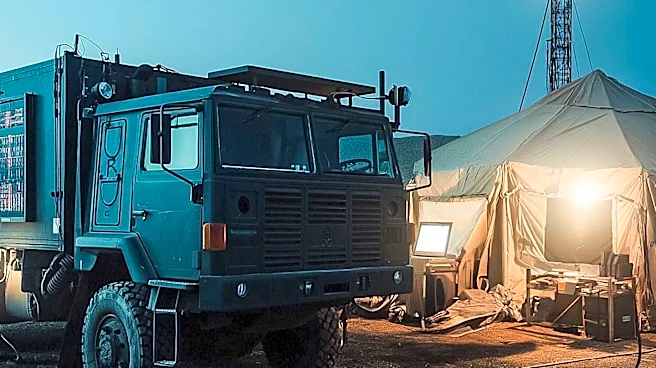
plan missions with highly trained Guardians, focusing on integrating space capabilities into special operations. Colonel Norsky emphasized that Guardians on a 'space special warfare team' will assist the military's top operators in identifying vulnerabilities, including electromagnetic threats, GPS jamming, and interference with battlefield communications. The activation of SPACEFOR-SOC is part of a broader initiative by the Space Force to establish components focused on space threats in various regions, including the Middle East, Europe, Africa, and the Pacific.
Why It's Important?
The activation of SPACEFOR-SOC marks a significant step in the U.S. military's adaptation to the evolving nature of warfare, where space plays an increasingly critical role. This command will ensure that special operations forces have access to advanced space-based support, enhancing their survivability, awareness, and decision-making speed in critical situations. The focus on countering electromagnetic threats, GPS jamming, and communication interference directly addresses modern battlefield challenges that can severely impact operational effectiveness. By integrating specialized Guardians into special operations, the Space Force aims to provide a unique advantage, enabling more precise and resilient military actions. This development underscores the strategic importance of space as a domain for both defense and offense, and the necessity of specialized units to operate within it.
What's Next?
Colonel Norsky indicated that SPACEFOR-SOC will prioritize preserving survivability, awareness, and speed of decision-making for special operations forces. The command will seek Guardians who are experts in operations, intelligence, and cyber warfare, capable of maneuvering effectively with their special operations counterparts. This suggests a continued emphasis on inter-branch collaboration and specialized training to develop a highly integrated and effective space special warfare team. The activation of SPACEFOR-SOC is likely to lead to further development of doctrines, technologies, and training programs tailored to the unique challenges of space-enabled special operations. This will enhance the U.S. military's ability to conduct complex missions in contested environments, leveraging space assets to maintain a strategic edge.
Beyond the Headlines
The establishment of SPACEFOR-SOC reflects a deeper understanding within the U.S. military of how space capabilities are intertwined with ground-level operations. It signifies a move beyond simply using satellites for communication or reconnaissance to actively integrating space as a warfighting domain for special operations. This could lead to new forms of warfare, where space-based assets are not just targets but also active participants in tactical engagements. The focus on 'space special warfare teams' suggests a future where highly specialized personnel can manipulate or defend space assets in real-time to support missions. This development also raises questions about the ethical and legal boundaries of such operations, particularly concerning the use of space for offensive purposes and the potential for escalation in space conflicts. The long-term impact will be a more sophisticated and integrated approach to national security, with space at its core.