





What's Happening?
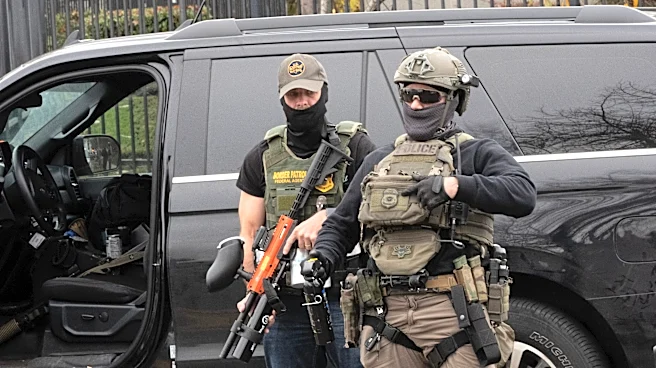
Indiana Representative André Carson is publicly accusing U.S. Immigration and Customs Enforcement (ICE) of engaging in racial profiling during increased immigration enforcement activities in Indianapolis. Carson cites national arrest data, asserting that
a significant majority of individuals arrested by ICE in July—specifically 96%—did not have prior violent criminal convictions. He argues that these arrests are not primarily focused on public safety but rather on racial profiling. In response to these concerns and reports of stepped-up ICE activity, including an incident on September 1 near Post Road and Interstate 70 where ICE agents reportedly pursued a man across several lanes of traffic, Carson has initiated a congressional inquiry. This inquiry seeks detailed information from the Department of Homeland Security (DHS) regarding the number of arrests and detentions, the legal basis for these actions, the criminal backgrounds of those apprehended, and the disposition of detained individuals. Carson has also reiterated his opposition to funding ICE, expressing concerns that their enforcement tactics are making the city less safe.
Why It's Important?
This situation is important because it highlights a contentious debate surrounding immigration enforcement tactics and their impact on communities within the U.S. Representative Carson's allegations of racial profiling, supported by statistical claims about the lack of violent criminal convictions among those arrested, challenge the stated objectives of ICE operations. If these claims are substantiated, it could lead to increased scrutiny of ICE's operational procedures and potentially influence future legislative decisions regarding the agency's funding and authority. The incident near Post Road and Interstate 70, cited as an example of dangerous enforcement tactics, raises public safety concerns for all residents, regardless of immigration status. The ongoing protests and the congressional inquiry reflect a growing demand for transparency and accountability from federal immigration agencies, impacting public trust and community relations. This also underscores the broader national discussion on immigration policy, balancing enforcement with civil liberties and community well-being.
What's Next?
The immediate next step involves the Department of Homeland Security (DHS) responding to Representative Carson's congressional inquiry. This response is expected to provide a clearer picture of ICE's activities in Indianapolis, including specific data on arrests, legal justifications, and the outcomes for those detained. Depending on the information provided, or lack thereof, further actions could be taken by Carson and other lawmakers, potentially leading to legislative proposals aimed at reforming ICE's enforcement practices or re-evaluating its funding. The ongoing public protests against ICE activity in Indianapolis are likely to continue, especially if community concerns remain unaddressed. The debate surrounding the necessity of a prior violent criminal conviction for immigration enforcement is also expected to persist, with various stakeholders advocating for different interpretations of immigration law. This situation could also set a precedent for how similar immigration enforcement operations are conducted and scrutinized in other U.S. cities.
Beyond the Headlines
Beyond the immediate concerns, this issue touches upon deeper ethical and legal dimensions of immigration enforcement in the United States. The accusation of racial profiling, if proven, could erode public trust in law enforcement and exacerbate tensions between immigrant communities and federal agencies. It also brings to the forefront the legal distinction between civil immigration violations and criminal offenses, a point often blurred in public discourse. The argument that unlawful presence itself constitutes a crime, as voiced by some commenters, contrasts with legal interpretations that often classify it as a civil violation. This debate has significant implications for how immigrants are perceived and treated within the justice system. Furthermore, the incident highlights the broader challenge of balancing national security and border control with human rights and community safety, prompting a re-evaluation of the methods and priorities of immigration enforcement agencies. The long-term impact could include shifts in public policy, legal challenges to current enforcement practices, and a redefinition of the role of federal agencies in local communities.