






What's Happening?
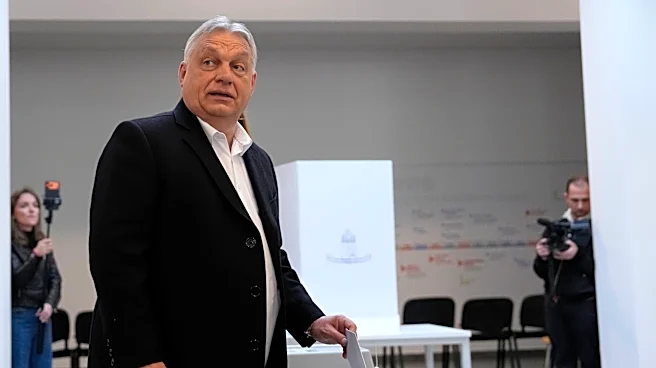
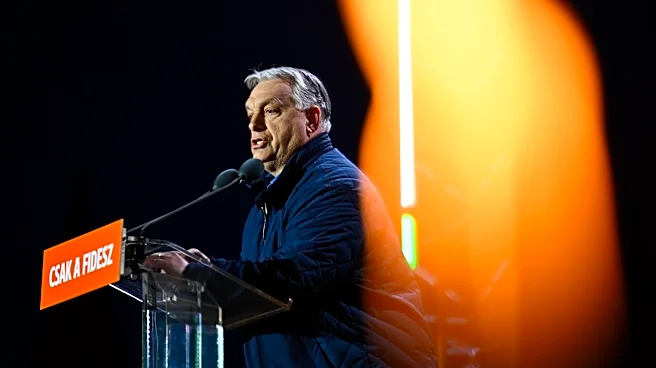
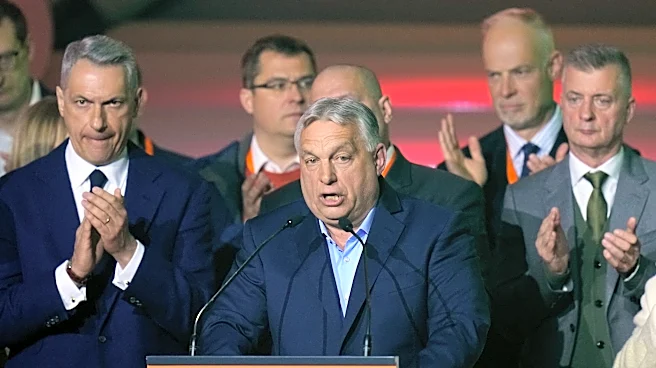
Hungarian Prime Minister Viktor Orbán has conceded defeat in the country's elections after 16 years in power. Orbán, a close ally of President Trump, faced growing discontent over economic stagnation and allegations of corruption. The opposition party,
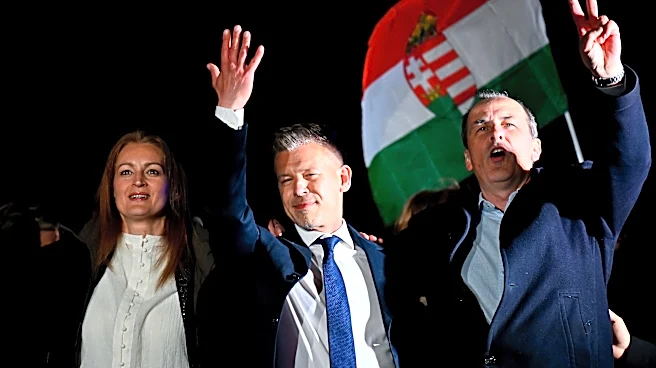
Tisza, led by Péter Magyar, is projected to win a two-thirds majority in parliament, allowing them to potentially pass a new constitution. This electoral outcome is expected to end Hungary's adversarial stance within the European Union, potentially facilitating a $105 billion loan to Ukraine. World leaders, including French President Emmanuel Macron and NATO Secretary General Mark Rutte, have congratulated Magyar on his victory, highlighting the election's significance for Europe.
Why It's Important?
Orbán's defeat marks a significant shift in European politics, potentially altering Hungary's relationship with the EU. The new government is likely to adopt a more cooperative approach, aligning with EU values and policies. This change could strengthen the EU's unity and influence, particularly in its dealings with Russia and other global powers. For the U.S., Orbán's loss may impact its strategic interests in Europe, as Hungary's new leadership may prioritize EU relations over ties with the U.S. The election results also reflect broader trends of political change in Europe, as voters increasingly reject authoritarian leadership styles.
What's Next?
The Tisza party's victory opens the door for significant political and constitutional reforms in Hungary. Péter Magyar is expected to focus on restoring democratic institutions and improving relations with the EU. The new government may also prioritize economic reforms to address the issues that contributed to Orbán's defeat. Internationally, Hungary's shift could influence other EU member states to reevaluate their political alliances and strategies. The U.S. may need to adjust its foreign policy approach in the region, considering the changing dynamics of European politics.