





What's Happening?
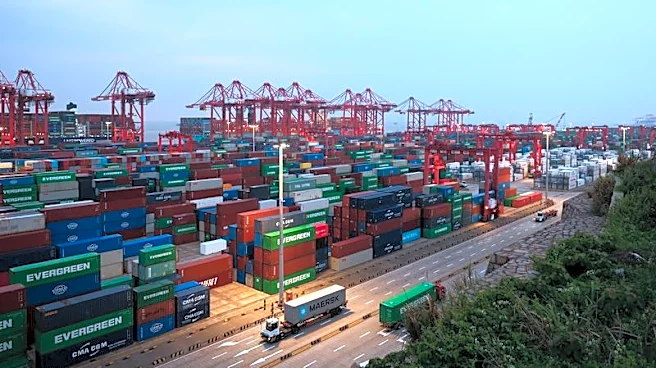
The narrative of 'China Shock 2.0' has emerged as China's manufacturing capabilities continue to expand beyond low-value goods to include advanced products like cars, batteries, and electronics. This shift has prompted protectionist responses from Western
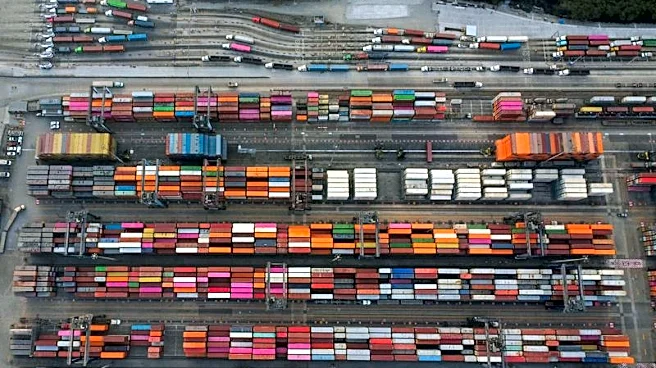
countries, particularly the United States and Europe, which view China's growing export dominance as a threat to their industrial bases. The term 'China Shock' originally described the economic disruption caused by China's entry into the World Trade Organization in 2001, which led to an influx of cheap Chinese goods into Western markets. The current wave of concern reflects fears over China's increasing share of global manufacturing, projected to reach 45% by 2030.
Why It's Important?
The 'China Shock 2.0' narrative underscores the challenges faced by Western economies in maintaining their industrial competitiveness in the face of China's rapid growth. As China continues to dominate global manufacturing, countries are grappling with how to protect their industries while engaging with China economically. This situation highlights the need for strategic industrial policies that can bolster domestic manufacturing capabilities. The narrative also reflects broader geopolitical tensions, as Western countries seek to balance economic cooperation with concerns over national security and technological leadership.
Beyond the Headlines
The discourse around 'China Shock 2.0' reveals underlying assumptions about global economic hierarchies and the perceived natural order of Western dominance. The narrative often overlooks the benefits that China's manufacturing growth has brought to Western consumers, such as lower prices and increased access to goods. It also raises ethical questions about the fairness of trade practices and the role of state intervention in economic development. As countries navigate these complex dynamics, the conversation around China's rise may evolve to focus more on collaboration and mutual benefit rather than competition and containment.