






What's Happening?
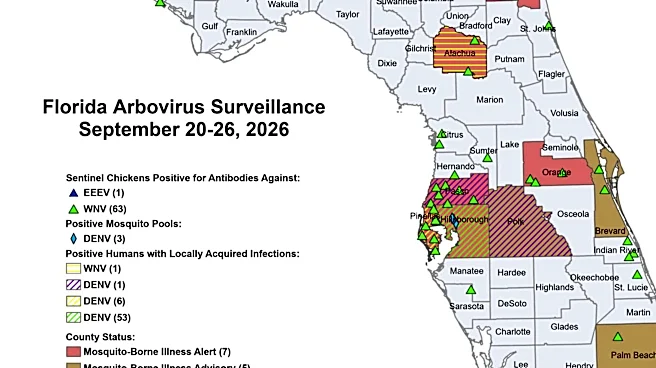
Hillsborough County, Florida, is currently facing its most substantial dengue outbreak in decades, with 223 confirmed cases reported by September 26. This figure represents over seven times the number of cases in all other Florida counties combined. The
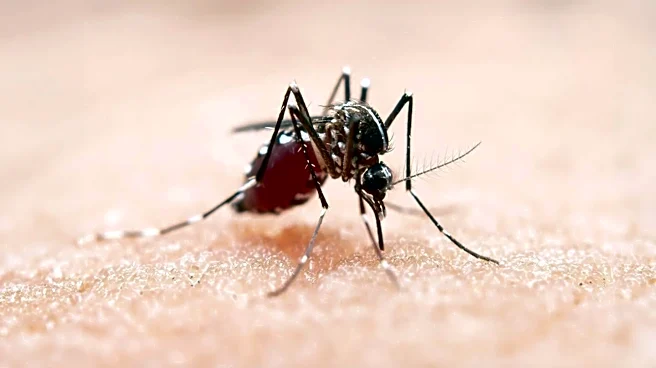
majority of these cases are locally acquired, indicating that individuals were infected by mosquitoes within Florida rather than during international travel. Carla Fry of the Florida Department of Health in Hillsborough County attributes the surge to a combination of unnoticed infections and a significant increase in the mosquito population following heavy rainfall in August. Peter Jiang, head of mosquito control for Hillsborough County, noted that daily rainfall created ideal breeding conditions for the Aedes aegypti mosquito, which is responsible for transmitting the virus. These mosquitoes typically breed in small, water-filled containers around homes, facilitating rapid spread within neighborhoods.
Why It's Important?
The dengue surge in Hillsborough County poses a significant public health challenge due to the virus's potential for rapid transmission and the often asymptomatic nature of infections. Many individuals may carry the virus without realizing it, leading to further spread when bitten by mosquitoes. This situation strains local healthcare resources and highlights the critical role of mosquito control programs. The outbreak also underscores the vulnerability of communities to vector-borne diseases, especially with changing weather patterns that can create favorable conditions for mosquito breeding. The economic impact could include increased healthcare costs, potential disruptions to local tourism, and the need for extensive public health campaigns. The situation also brings to light the importance of public awareness and participation in preventative measures, such as eliminating standing water around homes.
What's Next?
In response to the outbreak, mosquito control districts across multiple counties are collaborating, with Lee County deploying helicopters to assist Hillsborough in spraying efforts, and neighboring districts sharing staff and equipment. Crews are actively inspecting properties and urging residents to remove or cover outdoor containers that collect water to disrupt mosquito breeding cycles. Officials are also concerned about the potential for an unusually wet winter due to El Niño, which could prolong elevated mosquito populations instead of the typical seasonal decline. The Centers for Disease Control (CDC) has pledged $800,000 to aid the response, though the funds had not yet arrived as of the report. Additionally, there are concerns that Florida ballot measure Amendment 3 could reduce property tax revenue, potentially impacting the funding for mosquito control operations.
Beyond the Headlines
The dengue outbreak in Hillsborough County reveals deeper implications regarding climate change, urban planning, and public health infrastructure. Increased frequency and intensity of rainfall, potentially linked to climate change, create more opportunities for mosquito breeding, making such outbreaks more likely in the future. The challenge of asymptomatic carriers highlights the need for advanced surveillance systems and rapid diagnostic tools to track and contain viral spread effectively. Furthermore, the reliance on property tax revenue for mosquito control funding underscores the delicate balance between public health services and fiscal policies. This situation could prompt a re-evaluation of funding mechanisms for essential public health programs and encourage more integrated approaches to urban development that consider environmental factors influencing disease transmission. The outbreak also serves as a stark reminder of the interconnectedness of environmental health and human well-being.