




What's Happening?
First Lady Melania Trump successfully brokered a six-day localized ceasefire in Oleshky, a Russian-controlled Ukrainian city in the Kherson region. This ceasefire, which lasted from October 27 to November 1, marked the first significant pause in hostilities
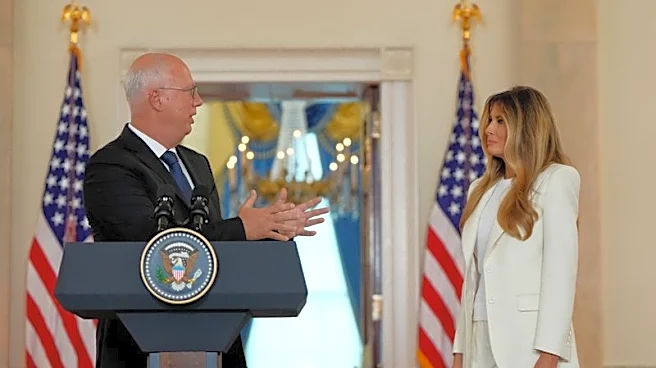
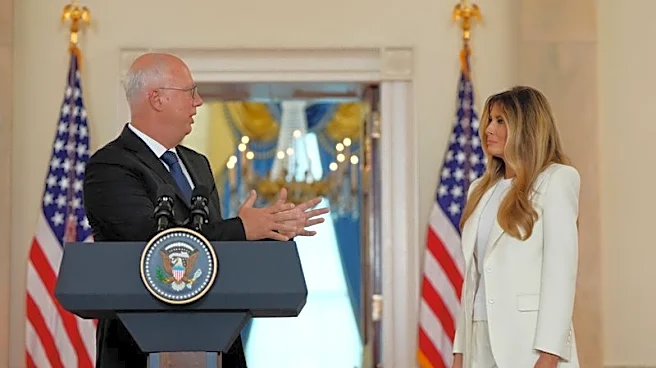
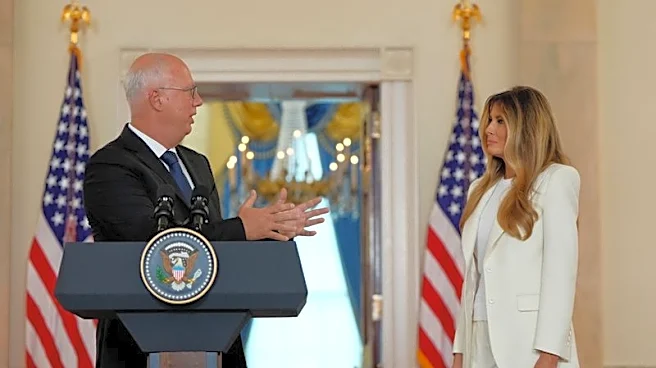
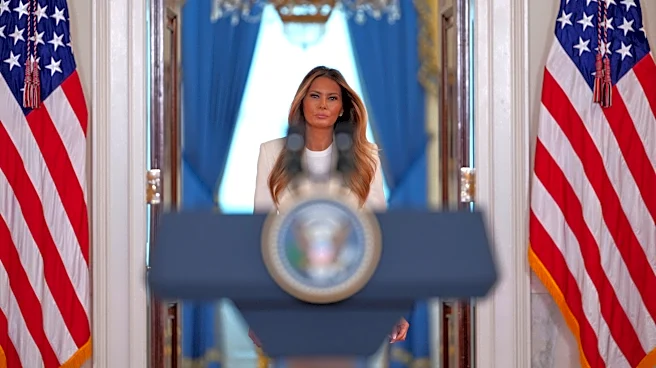
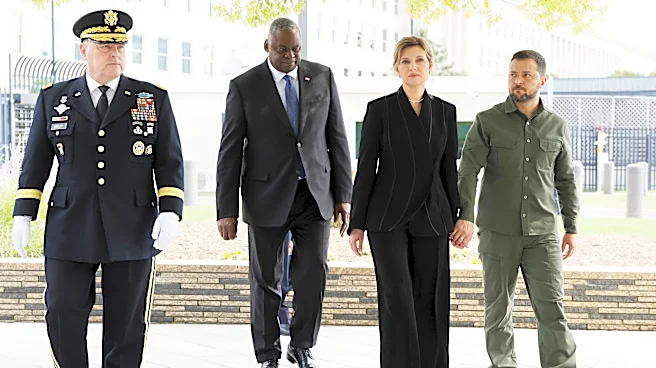
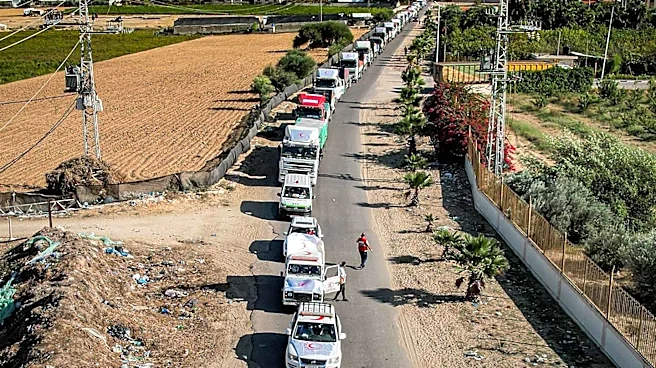
between Russia and Ukraine in four years. During this period, humanitarian aid was delivered to the region, and approximately 800 residents were safely evacuated. The First Lady hosted a meeting at the White House with Russian President Vladimir Putin’s special envoy, Kirill Dmitriev, and Ukrainian faction leader David Arakhamia, to highlight the initiative. She emphasized her direct involvement in planning the ceasefire, including reviewing aerial images and evacuation routes, and utilized existing communication channels established during previous reunification efforts for children and families in Russia and Ukraine. Oleshky, occupied by Russia since 2022, has faced severe humanitarian and food crises, with an estimated 1,700 to 2,000 residents remaining, primarily elders and 50 children.
Why It's Important?
This ceasefire is significant as it represents a rare instance of direct humanitarian intervention and de-escalation in the ongoing conflict between Russia and Ukraine, brokered by a U.S. First Lady. The successful delivery of aid and evacuation of civilians in Oleshky demonstrates a potential pathway for addressing humanitarian crises in conflict zones, even amidst broader geopolitical tensions. The involvement of high-level representatives from both Russia and Ukraine at the White House event, with Russian President Vladimir Putin's special envoy acknowledging the First Lady's role, suggests a willingness from both sides to engage in specific, limited humanitarian initiatives. This event could set a precedent for future localized ceasefires aimed at alleviating civilian suffering, offering a glimmer of hope for 'humanity over war' in a conflict that has seen little respite. It also highlights the potential for non-traditional diplomatic channels to achieve tangible results in complex international disputes.
What's Next?
Following the localized ceasefire, the United States is scheduled to mediate 'working-level negotiations' between Russia and Ukraine on November 10 and 11. This indicates a potential for further diplomatic engagement, building on the momentum generated by the Oleshky ceasefire. The success of this humanitarian mission may encourage similar efforts in other conflict-affected areas, potentially leading to more sustained periods of peace or broader humanitarian corridors. The First Lady expressed hope that this localized ceasefire would inspire 'greater peace' between Russia and Ukraine, suggesting that the initiative could serve as a model for future de-escalation efforts. However, the broader implications for the overall conflict remain uncertain, as previous attempts at peace negotiations have faced significant challenges. The upcoming negotiations will be crucial in determining if this humanitarian success can translate into more comprehensive diplomatic progress.
Beyond the Headlines
The First Lady's direct involvement in brokering this ceasefire introduces a unique dimension to international diplomacy, showcasing how humanitarian concerns can sometimes transcend entrenched political stalemates. Her use of established communication channels, initially for family reunification efforts, highlights the potential for non-traditional diplomatic avenues to achieve results where formal state-to-state negotiations might falter. This event also subtly underscores the role of soft power and humanitarian initiatives in foreign policy, potentially offering a less confrontational approach to complex international relations. The focus on 'humanity over war' could resonate globally, emphasizing the universal need to protect civilians in conflict. However, the challenge remains in scaling such localized successes into broader, lasting peace, especially given the deep-seated issues driving the Russia-Ukraine conflict. The event also implicitly raises questions about the effectiveness of previous diplomatic efforts and the potential for new approaches to conflict resolution.