







What's Happening?
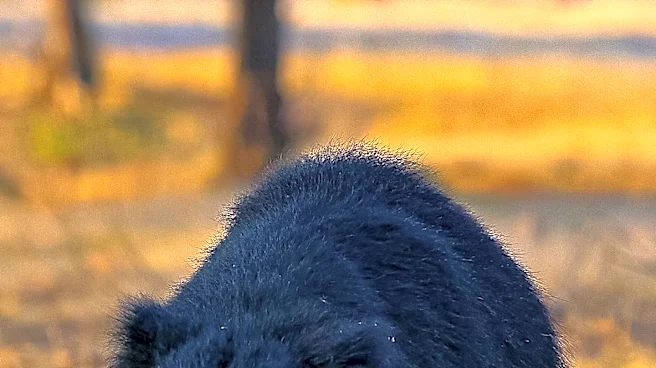
A 52-year-old coffee estate supervisor, R Moses, was severely injured in a sloth bear attack at Valparai, within the Anamalai Tiger Reserve (ATR) in Coimbatore, India. The incident occurred on Tuesday evening around 7:45 PM while Moses was reportedly
walking through a tea plantation and along a stream at Upper Paralai. He sustained injuries to his left eye and head. Locals rescued him upon hearing his screams, and members of the Human-Wildlife Conflict Prevention Committee transported him to the Valparai government hospital. After receiving first aid, he was referred to the Coimbatore Medical College and Hospital (CMCH) for further treatment. Valparai Forest Range Officer Suresh Krishna stated that the incident happened after Moses entered an area frequented by wild animals, including sloth bears, and emphasized the dangers of being in such areas, especially under the influence of alcohol, during dawn and after dark.
Why It's Important?
While this incident occurred in India, it highlights critical issues relevant to U.S. regions with significant wildlife populations, particularly in areas where human activity borders natural habitats. The U.S. also experiences human-wildlife conflicts, including bear encounters, especially in states with large bear populations like Alaska, Montana, Wyoming, and parts of the Appalachian region. This event underscores the importance of public awareness campaigns, responsible behavior in wildlife areas, and effective human-wildlife conflict prevention strategies. The involvement of a Human-Wildlife Conflict Prevention Committee in India demonstrates a proactive approach to managing these interactions, a model that could offer insights for U.S. wildlife agencies. The incident also emphasizes the need for clear guidelines for residents and visitors in areas prone to wildlife encounters, particularly concerning activities during low-light hours and the consumption of alcohol, which can impair judgment and increase vulnerability.
What's Next?
Following the incident, members of the Human-Wildlife Conflict Prevention Committee at Upper Paralai have been engaged to monitor the sloth bear's movements. Forest department officials have urged the public to report any wildlife-related information to nearby forest department staff and to identify wild animal movements through the 'Thadam' WhatsApp group. They are also continuing to instruct people to avoid visiting estates, tea plantations, stream bunds, and forest areas during dawn and after dark, and to be particularly cautious if under the influence of alcohol. The focus remains on preventing future incidents through increased vigilance and public education. For R Moses, his recovery at the Coimbatore Medical College and Hospital is ongoing. The long-term implications may include enhanced safety protocols for estate workers and residents in the Anamalai Tiger Reserve area.
Beyond the Headlines
The sloth bear attack in Coimbatore sheds light on the broader ecological and social challenges of coexisting with wildlife in increasingly fragmented landscapes. The incident underscores the vulnerability of individuals who work or reside in close proximity to wildlife habitats, particularly when human behavior, such as walking alone at night or under the influence of alcohol, increases risk. This event highlights the need for comprehensive strategies that go beyond immediate response, focusing on habitat preservation, community engagement, and sustainable land management practices. It also brings to the forefront the ethical considerations of managing wildlife populations in areas with human encroachment, balancing conservation efforts with public safety. The use of community-based committees and digital platforms like WhatsApp for wildlife monitoring offers a glimpse into innovative approaches to mitigate human-wildlife conflict, which could be adapted and studied by U.S. wildlife management agencies facing similar challenges.