





What's Happening?
Ohio Governor Mike DeWine has issued an order for the flags of the United States and the State of Ohio to be flown at half-staff in honor of former state Representative Marilyn Slaby. The directive applies to all public buildings and grounds within Summit
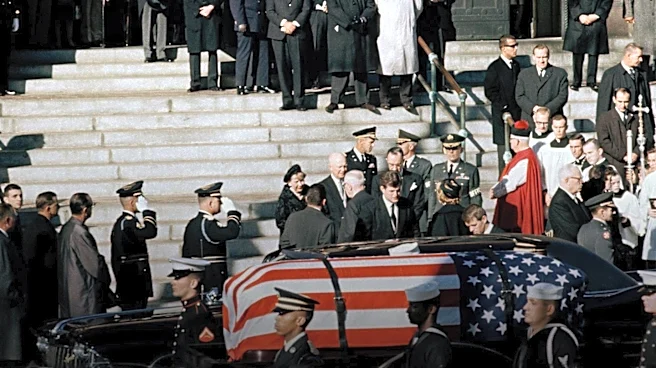
and Stark counties, as well as the Ohio Statehouse, Vern Riffe Center, and Rhodes Tower. The flags are to be lowered from sunrise to sunset on October 31, 2026, which is the day of her funeral. Additionally, the order permits other public buildings and grounds throughout the state to fly flags at half-staff during the same period, at their discretion. This action is a traditional mark of respect and remembrance for individuals who have served in public office.
Why It's Important?
The lowering of flags to half-staff is a significant symbolic gesture in the United States, reserved for honoring individuals who have made substantial contributions to public service or in times of national mourning. In this instance, it recognizes the dedicated service of former state Representative Marilyn Slaby to the people of Ohio. Such gestures reinforce civic values and acknowledge the sacrifices and efforts of public officials. For the community, it provides an opportunity for collective remembrance and respect, highlighting the impact of local and state leadership. This tradition helps to maintain a sense of continuity and shared history within the state, reminding citizens of the individuals who have shaped its governance and policies. It also serves as a moment for reflection on the nature of public service and its importance to democratic institutions.
What's Next?
The flags will be flown at half-staff on October 31, 2026, in accordance with Governor DeWine's order. Following the funeral services for former state Representative Marilyn Slaby, the flags will be returned to full-staff at sunset on the same day. No further official actions are typically associated with such a directive beyond the period of mourning. The community and public officials will continue to remember and honor her legacy through various means, such as historical records, local commemorations, and the ongoing impact of her legislative work. This event concludes the formal period of state-wide mourning for her passing.
Beyond the Headlines
Beyond the immediate act of lowering flags, this event underscores the broader cultural practice of honoring public servants and the role of symbolic gestures in national and state identity. It reflects a societal value placed on civic duty and the recognition of individuals who dedicate their lives to governance. The act of mourning a former representative, even at a state level, contributes to the collective memory of political leadership and the evolution of public policy. It also subtly reinforces the idea that public service, regardless of political affiliation, is a respected endeavor. Such traditions help to bridge political divides by focusing on shared respect for service, fostering a sense of community and continuity in the face of change.