






What's Happening?
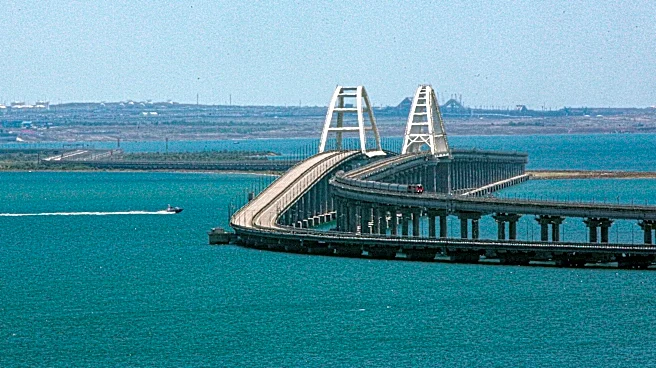
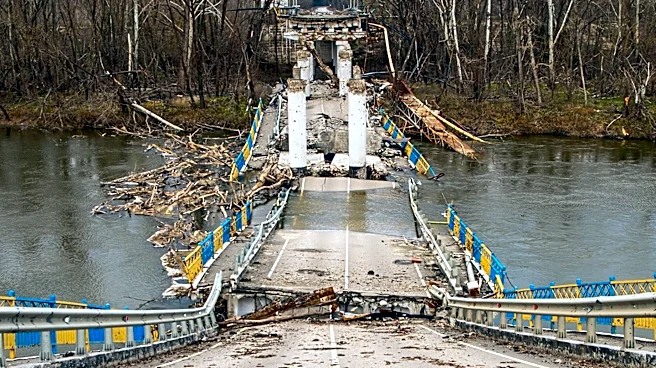
The Crimean Bridge, a significant symbol of Russia's integration of Crimea, has sustained damage from Ukrainian strikes, causing a section of its road structure to collapse and affecting a railway section. This incident occurred immediately before a scheduled
trilateral summit in Shenzhen involving President Trump, President Putin, and Chinese President Xi Jinping. While Russia temporarily suspended traffic, railway service was reportedly resumed. The attack is seen as part of a systematic Ukrainian campaign against Russian lines of communication through occupied Crimea. The damage complicates Russian supply routes to the peninsula and southern Ukraine, increasing reliance on alternative routes. The incident challenges Russia's claims of assured control over Crimea and its assertion that Ukraine's capabilities are diminishing, creating a complex backdrop for President Putin's diplomatic engagements.
Why It's Important?
The damage to the Crimean Bridge holds significant political and psychological implications for Russia, particularly in the context of upcoming international negotiations. The bridge is not merely a logistical asset but a powerful symbol of President Putin's political project in Crimea. Its vulnerability undermines Russia's narrative of irreversible control over the peninsula and questions the effectiveness of its defenses for critical infrastructure. This could weaken President Putin's negotiating position at the Shenzhen summit, as it challenges the perception of Russia's unquestioned strength. The incident also forces President Putin to contend with domestic pressure from those advocating for escalation, potentially influencing his diplomatic tactics. For the United States, the event highlights the ongoing military escalation and the complexities of achieving a lasting peace, emphasizing the need for a diplomatic approach that avoids legitimizing territorial aggression.
What's Next?
The strike on the Crimean Bridge is likely to influence Russia's negotiating tactics, though not necessarily its fundamental political demands. President Putin faces choices between demonstrative escalation, limited diplomatic flexibility, or prolonging negotiations. Russia has already responded with strikes against Ukrainian bridges, indicating a potential for a mutually expanding campaign of infrastructure attacks. At the Shenzhen summit, President Putin will likely seek to consolidate diplomatic gains and appear as a participant in global order discussions, despite Russia's aggression. However, the bridge's vulnerability may constrain his ability to dictate terms. For President Trump, the summit presents an opportunity to demonstrate diplomatic achievement, but there's a risk of a hasty political settlement that could reward Russian aggression. The outcome will depend on whether the U.S. administration uses its leverage to achieve a durable settlement or prioritizes a quick diplomatic result.
Beyond the Headlines
The attack on the Crimean Bridge underscores a deeper geopolitical struggle where military actions directly impact diplomatic leverage. The incident highlights the ongoing challenge for international diplomacy to address conflicts where one party seeks to convert military pressure into political concessions while its strategic infrastructure remains vulnerable. For China, the damage to the bridge demonstrates that Russia, despite its military resources, cannot fully protect even its most symbolic assets, potentially influencing Beijing's strategic partnership with Moscow. The event also raises questions about the long-term stability of territorial gains achieved through military force and the credibility of claims of control. The interplay between military vulnerability and diplomatic posturing will be a critical element in future negotiations, shaping the broader redistribution of influence among global powers and potentially setting precedents for international security frameworks.