
What's Happening?
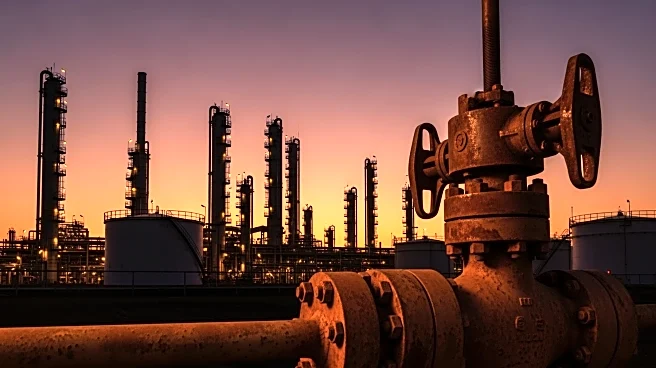
Venezuela is facing a critical situation as it may be forced to shut down oil production due to a lack of storage space, exacerbated by a U.S. tanker blockade. According to Bloomberg, the blockade has
led to a significant backlog, with the largest oil storage facilities and tankers at Venezuelan ports nearing full capacity. This situation could compel Venezuela to curtail its oil production within the next ten days. The International Energy Agency reported a decline in Venezuela's oil output, which fell to 860,000 barrels per day in November from over a million barrels per day in previous months. The U.S. has intensified its actions in Caribbean waters, seizing tankers carrying Venezuelan crude, and is reportedly prepared to target more vessels. Additionally, the blockade has disrupted Venezuela's supply of Russian naphtha, a crucial diluent for its heavy crude, further complicating the country's ability to maintain oil exports.
Why It's Important?
The potential shutdown of Venezuelan oil wells could have significant implications for global oil markets, particularly affecting countries reliant on Venezuelan crude. The U.S. blockade is part of broader sanctions aimed at pressuring the Venezuelan government, but it also risks destabilizing the country's already fragile economy. A reduction in Venezuelan oil exports could lead to increased volatility in global oil prices, impacting energy markets and potentially leading to higher fuel costs. The situation underscores the geopolitical tensions between the U.S. and Venezuela, with the blockade serving as a tool to exert economic pressure. The disruption in oil supply also highlights the vulnerabilities of countries heavily dependent on a single export commodity, as well as the broader implications of international sanctions on global trade and energy security.
What's Next?
If the storage crisis continues, Venezuela may have to implement significant production cuts, potentially losing up to 500,000 barrels per day. This would further strain the country's economy and could lead to increased political instability. The Venezuelan government may seek alternative solutions, such as finding new buyers or negotiating with the U.S. to ease the blockade. International stakeholders, including oil-importing nations and global energy companies, will be closely monitoring the situation, as any prolonged disruption could necessitate adjustments in supply chains and sourcing strategies. The U.S. may also face diplomatic pressure from other countries affected by the blockade's impact on oil markets.