



What's Happening?
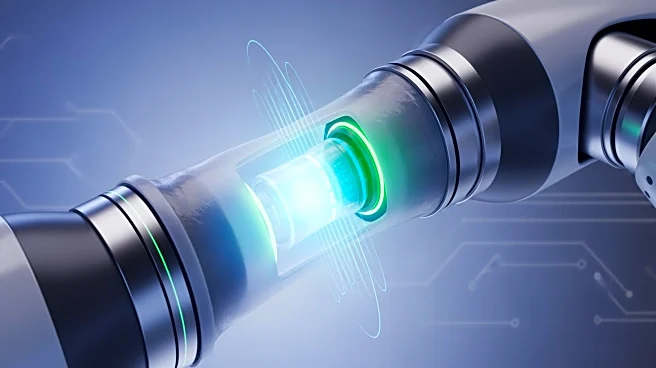
Researchers at Northeast Normal University in China have developed a self-healing pain sensor made from gelatin, which could give robots human-like reflexes. This innovation involves a gelatin memristor with 16 stable conductance states that mimics biological
pain perception. The sensor rates intensity, sensitizes after injury, and self-heals while directly controlling mouse muscle response. The memristor's quantized conductance behavior allows it to encode pain intensity similarly to biological nociceptors. The device is constructed using a gelatin-based pressure sensor and a memristor functioning as the nociceptor, which converts mechanical pressure into graded electrical signals that stimulate muscle contraction. This development represents a significant advancement in creating humanoid robots and advanced prosthetics that can operate safely in complex environments.
Why It's Important?
The development of a self-healing pain sensor is crucial for advancing robotics and prosthetics. By mimicking the nuanced pain response of biological systems, robots equipped with this technology could better navigate unpredictable environments, enhancing their safety and functionality. This innovation could lead to more adaptive and self-protecting robotic systems, which are essential for applications in healthcare, manufacturing, and service industries. Additionally, the technology may inform the design of neuroprosthetics and new strategies for managing chronic pain, offering potential benefits to individuals with disabilities or chronic pain conditions.
What's Next?
The next steps involve further testing and refinement of the sensor to ensure its reliability and effectiveness in real-world applications. Researchers may focus on integrating the sensor into robotic systems and prosthetics to evaluate its performance in various scenarios. Additionally, exploring the potential for commercial production and collaboration with industry partners could accelerate the deployment of this technology. The development of more advanced and cost-effective manufacturing processes will be crucial for widespread adoption.
Beyond the Headlines
This innovation raises ethical and legal questions about the use of robots with human-like reflexes in society. As robots become more autonomous and capable of mimicking human responses, there will be a need to address issues related to liability, safety, and the potential impact on employment. Furthermore, the development of such advanced technologies may lead to discussions about the ethical implications of creating machines that can experience pain-like sensations.