


What's Happening?
New York City has introduced its first Urban Forest Plan (UFP), a comprehensive strategy aimed at increasing the city's tree canopy coverage to 30% by 2040. This initiative, led by the Mayor’s Office of Climate & Environmental Justice (MOCEJ) in collaboration
with several organizations including NYC Department of Parks & Recreation and The Nature Conservancy, seeks to add an average of 700 acres of tree canopy annually for the next 14 years. The plan emphasizes a holistic approach to preserving existing trees, planting new ones, and expanding the network of individuals involved in urban forest stewardship. Currently, New York City's tree canopy covers 23.4% of its land, approximately 45,000 acres, with significant disparities across boroughs and within Environmental Justice (EJ) communities. For instance, EJ areas have 19% tree canopy coverage compared to 26% in non-EJ areas, and some Brooklyn neighborhoods like Sunset Park West have as little as 10%.
Why It's Important?
This Urban Forest Plan is crucial for New York City's climate resiliency and public health, especially as summers become hotter due to climate change. Trees act as natural air conditioners, reducing surface and air temperatures by providing shade and cooling city streets by up to 2°F, with forested areas being 6°F cooler than surrounding neighborhoods. The city's existing 7 million trees already remove 1,100 tons of air pollution and sequester 51,000 tons of carbon annually, contributing to slower climate change and improved air quality. Expanding the tree canopy will further enhance these benefits, reducing greenhouse gas emissions, managing stormwater runoff, and protecting against harmful UV rays. Moreover, increased tree coverage is expected to improve public health by lowering instances of acute respiratory illnesses and heat-related deaths, while also positively impacting mental health and reducing stress. The plan's focus on equitable distribution of trees is particularly important for Environmental Justice communities, which currently suffer from lower canopy coverage and higher health risks associated with air pollution.
What's Next?
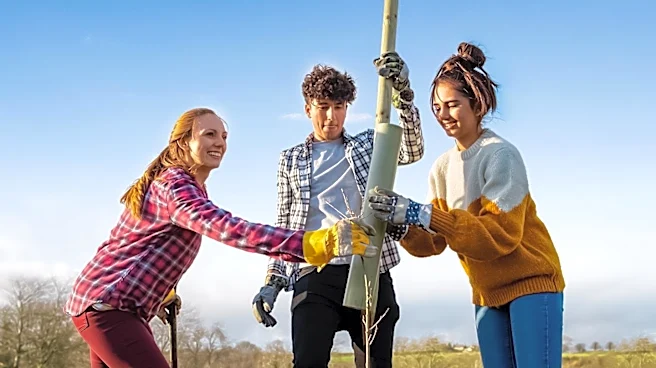
The implementation of the Urban Forest Plan will involve cultivating new and existing stewards of the urban forest. This includes strengthening volunteer stewardship practices, creating more opportunities for community involvement, and expanding urban forestry-related job opportunities. The plan aims to move beyond previous initiatives, such as the MillionTreesNYC program, by integrating long-term maintenance and protection of trees alongside planting efforts. This holistic approach will ensure the sustainability and effectiveness of the expanded tree canopy. The success of the UFP will depend on continuous collaboration between city agencies, non-profits, and community members to achieve the ambitious goal of 30% tree canopy coverage by 2040, ultimately fostering a more resilient, livable, and equitable New York City.
Beyond the Headlines
The Urban Forest Plan highlights a broader shift in urban planning towards nature-based solutions for climate change adaptation. By recognizing trees not just as aesthetic elements but as critical infrastructure for public health and environmental resilience, New York City is setting a precedent for other global megacities. The plan's emphasis on equity addresses the historical disparities in environmental benefits, aiming to rectify situations where lower-income and minority communities often bear the brunt of environmental degradation and lack of green spaces. This initiative also underscores the economic value of urban forests, as they reduce healthcare costs, improve productivity, and enhance property values. The long-term success of such plans could redefine urban living, promoting a symbiotic relationship between human development and natural ecosystems, and fostering a deeper appreciation for the ecological services provided by urban green spaces.