




What's Happening?
The U.S. Air Force Reserve Command (AFRC) held an assumption of command ceremony at the Museum of Aviation on August 21, where Lt. Gen. Paul R. "Speedy" Fast officially took leadership. Air Force Chief of Staff Gen. Ken Wilsbach presided over the ceremony,
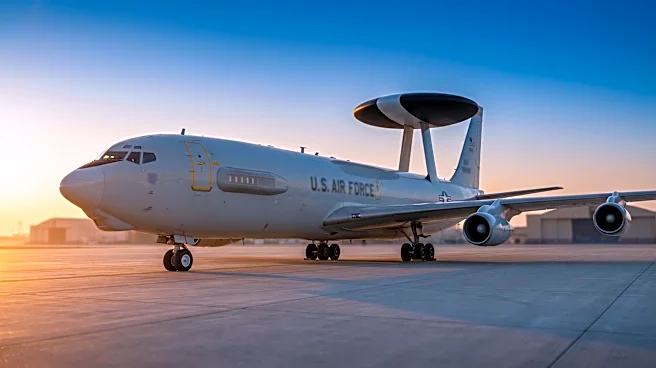
endorsing Fast's leadership, operational credibility, strategic vision, and command experience. Lt. Gen. Fast succeeds Lt. Gen. John P. Healy, who is set to retire in October after 37 years of service. As the new AFRC commander, Fast will oversee nearly 70,000 Reserve Airmen and civilians across three numbered air forces, 34 flying wings, eight independent groups, a space wing, a cyber wing, and an intelligence, surveillance, and reconnaissance wing, along with other subordinate units. He will also serve as the principal adviser on Reserve matters to the Secretary of the Air Force and the Air Force Chief of Staff. Fast's career began in 1991 after commissioning through the Air Force Reserve Officer Training Corps program at Miami University, Oxford, Ohio. He served on active duty from 1992 to 2001, accumulating over 1,000 hours in the E-3 Airborne Warning and Control System, before joining the Air Force Reserve in October 2001. His extensive experience includes supporting exercises and operations globally, serving as interim 36th Wing commander at Andersen Air Force Base, and leading the reconstitution of Andersen Air Force Base after Super Typhoon Mawar. Prior to this new role, Fast commanded the Fourth Air Force, where he managed the largest mobilization of Reserve forces in over 30 years for Operation Epic Fury.
Why It's Important?
The appointment of Lt. Gen. Paul Fast to lead the Air Force Reserve Command is significant for U.S. national security and military readiness. His leadership comes at a critical time when the Air Force is emphasizing modernization, force integration, and collective readiness to deter adversaries. The Air Force Reserve plays a crucial role in providing surge capacity and specialized skills that complement the active-duty force, making the selection of its commander vital for maintaining operational effectiveness. Fast's background, particularly his experience with large-scale mobilizations like Operation Epic Fury, suggests a focus on combat power generation and deployment, which is essential for responding to evolving global threats. His role as principal adviser on Reserve matters will influence policy and resource allocation, directly impacting the capabilities and well-being of thousands of Reserve Airmen and civilians. The emphasis on developing Airmen, preserving their ability to serve, and curating a future-ready Reserve force highlights the ongoing need to attract and retain talent in a competitive environment, ensuring the U.S. military maintains its technological and operational edge.
What's Next?
Following his assumption of command, Lt. Gen. Paul Fast has outlined five key task areas that will be refined in the coming weeks. These include preparing for war, developing Airmen, preserving and protecting Reservists' ability to serve, fiercely managing and executing resources, and curating a Reserve force of the future. These task areas indicate a strategic direction focused on enhancing readiness, personnel development, and resource optimization within the Air Force Reserve. The command will likely undertake initiatives to implement these objectives, which could involve new training programs, policy adjustments to support Reservists, and technological upgrades. The emphasis on a "Reserve force of the future" suggests potential innovations in recruitment, retention, and operational integration to meet emerging challenges. Stakeholders, including Airmen, civilian personnel, and defense policymakers, will be closely watching how these task areas translate into concrete actions and their impact on the overall effectiveness and capabilities of the U.S. Air Force Reserve.
Beyond the Headlines
The transition of leadership within the Air Force Reserve Command underscores broader trends in military strategy, particularly the increasing reliance on reserve components for specialized skills and surge capacity. The mention of a "Reserve force of the future" hints at ongoing discussions within the U.S. military about adapting to modern warfare, which increasingly involves cyber and space domains. This shift necessitates a workforce that can fluidly move between private-sector careers and military duty, bringing diverse expertise to the defense sector. The challenge lies in balancing the unique attributes of a reserve force—such as its cost-effectiveness and access to civilian talent—with the need for seamless integration and readiness. Furthermore, the focus on deterring adversaries through unity of effort highlights the psychological aspect of defense, where a strong, cohesive military, including its reserve elements, signals national resolve. This strategic approach aims to prevent conflicts by demonstrating overwhelming capability and preparedness, thereby influencing the calculations of potential adversaries.