

What's Happening?
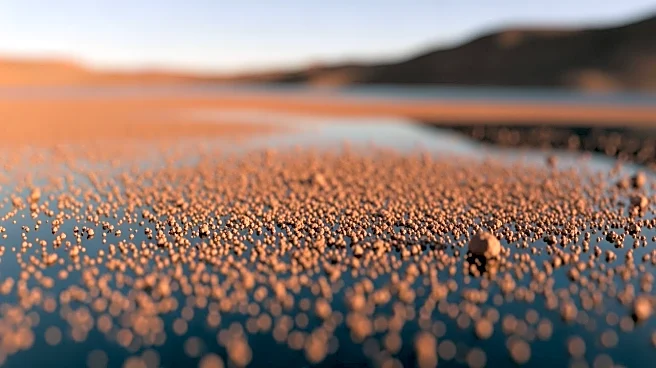
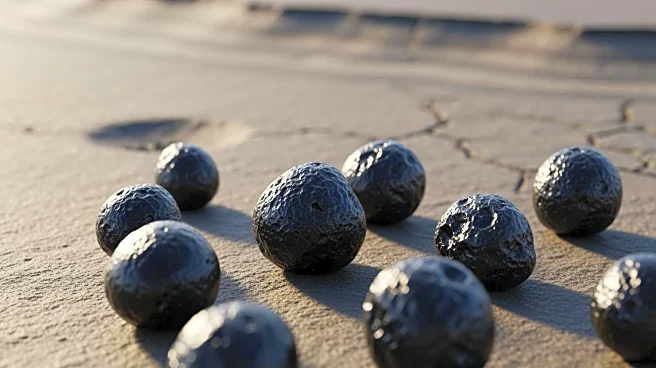
Scientists have discovered hundreds of glass fragments in Brazil, believed to be remnants of an ancient meteorite impact. These fragments, known as tektites, are formed when a meteorite strikes the Earth with enough force to melt surface rock, which then
cools and solidifies into glass. The tektites were found in a region spanning over 900 kilometers, primarily in Minas Gerais, but extending into neighboring states. Despite the discovery of these tektites, the impact crater from which they originated remains unidentified. The tektites, named geraisites after the state of their discovery, have a very low water content, confirming their impact origin. The source rocks are ancient, dating back to the Mesoarchean era, around 3 billion years ago. This discovery adds a significant piece to Brazil's geological history, suggesting that tektites might be more common than previously thought.
Why It's Important?
The discovery of the geraisite strewn field is significant as it fills a gap in Brazil's impact record and suggests that Earth's impact history might be more complex than currently understood. Identifying tektites helps scientists understand past meteorite impacts, which can inform models of Earth's geological and atmospheric evolution. The absence of a corresponding impact crater highlights the challenges in studying Earth's impact history due to geological processes that can obscure or erase evidence. This finding could lead to a reevaluation of other glassy materials previously misidentified, potentially uncovering more tektite fields globally. Understanding these impacts is crucial for assessing the frequency and potential risks of future meteorite impacts on Earth.
What's Next?
Researchers are continuing to study the geraisite strewn field to better understand the properties of the impact event, including its energy, velocity, and the volume of molten rock produced. They aim to locate the missing impact crater, which could provide further insights into the event's magnitude and effects. This ongoing research may also lead to the discovery of additional tektite fields, both in Brazil and worldwide, as scientists refine their methods for identifying these rare geological phenomena. The findings could influence future geological surveys and impact risk assessments, contributing to a more comprehensive understanding of Earth's impact history.
Beyond the Headlines
The discovery of the geraisite field raises questions about the preservation of impact evidence on Earth compared to other celestial bodies like the Moon or Mars, where such evidence is more readily visible. This highlights the dynamic nature of Earth's surface and the role of tectonic and atmospheric processes in shaping its geological record. The study of tektites also intersects with broader scientific inquiries into the history of Earth's crust and the processes that have shaped its development over billions of years. As researchers continue to explore these ancient impacts, they may uncover new information about the early conditions of Earth's surface and the forces that have influenced its evolution.