

What's Happening?
The interstellar comet 3I/ATLAS is set to make its closest approach to Earth on December 19, 2025, at a distance of approximately 269 million kilometers. This event provides a unique opportunity for astronomers to observe an interstellar object up close.
The comet, which was first detected in July 2025 by the ATLAS survey telescope in Chile, is the third known interstellar object to enter our solar system. It is composed of a solid, icy nucleus surrounded by a coma of gas and dust, and is rich in carbon dioxide, cyanide gas, and atomic nickel vapor. These chemical signatures offer insights into the materials from beyond our solar system.
Why It's Important?
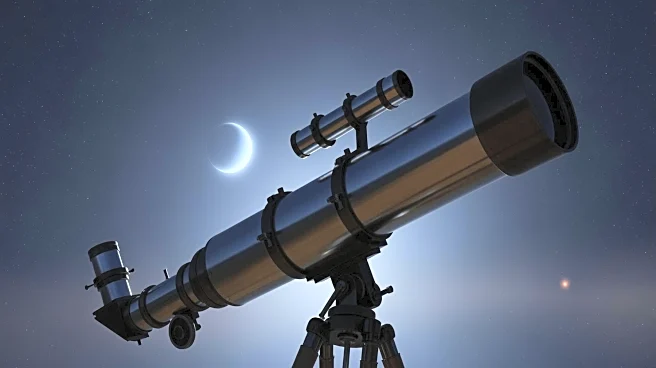
The approach of 3I/ATLAS offers a rare chance to study the composition and behavior of an interstellar object, potentially enhancing our understanding of planetary formation in other star systems. The comet's unique trajectory and chemical makeup provide valuable data for scientists studying the differences and similarities between our solar system and others. The event also serves as a practical test for global tracking systems and observation techniques, which could be crucial for future encounters with similar objects. Public interest in the comet is high, with opportunities for amateur astronomers to observe it using telescopes.
What's Next?
Following its closest approach to Earth, 3I/ATLAS will continue its journey through the solar system, passing near Jupiter in the spring of 2026. Observations will continue, allowing scientists to track the comet's activity and gather data on its composition and behavior. The event will also be used to refine tracking and observation techniques, which could be important for future encounters with interstellar objects. The Virtual Telescope Project will provide a livestream of the comet's approach, allowing the public to follow the event online.