

What's Happening?
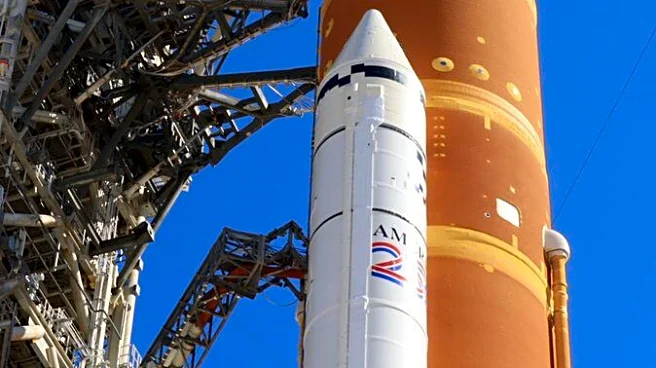
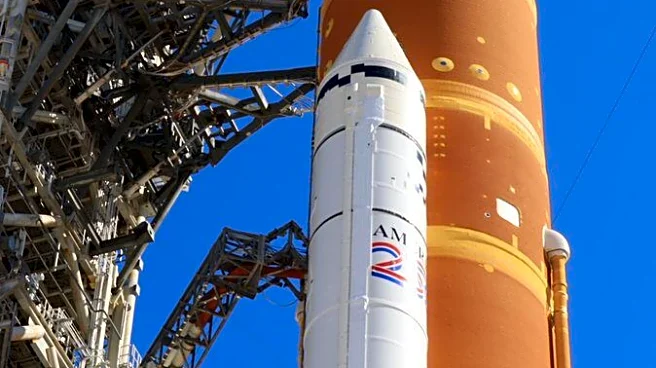
NASA is considering rolling back the Artemis II rocket and Orion spacecraft to the Vehicle Assembly Building at Kennedy Space Center after detecting an interrupted helium flow in the Space Launch System’s (SLS) upper stage. The issue was identified on February
21 and involves the interim cryogenic propulsion stage of the SLS rocket. NASA teams are currently reviewing data and preparing for a potential rollback, which would prevent the mission from launching during the March window. However, officials are working to preserve the possibility of an April launch, depending on technical findings and repair timelines. The helium is crucial for maintaining proper environmental conditions for the engine and pressurizing propellant tanks. Engineers are investigating several potential sources of the problem, including the interface between ground and rocket lines, a valve in the upper stage, and a filter between the ground systems and the rocket.
Why It's Important?
The potential delay of the Artemis II mission underscores the complexities and challenges of space exploration, particularly in the context of NASA's ambitious plans to return humans to the Moon. The Artemis program is a critical component of NASA's long-term goals for lunar exploration and eventual human missions to Mars. Any delay could impact the timeline and planning of subsequent missions, affecting international partnerships and the allocation of resources. The helium flow issue also highlights the importance of robust engineering and troubleshooting processes in ensuring the safety and success of space missions. The outcome of this situation will be closely watched by stakeholders in the aerospace industry and could influence future mission planning and risk management strategies.
What's Next?
NASA will continue to analyze data and make scheduling decisions in the coming days and weeks. If a rollback is required, the March launch window will no longer be feasible, but efforts are being made to keep the April launch opportunity open. The agency will provide updates as more information becomes available, and the resolution of the helium flow issue will be critical in determining the next steps for the Artemis II mission. The situation may prompt further reviews of the SLS rocket systems and could lead to adjustments in the mission timeline and strategy.