

What's Happening?
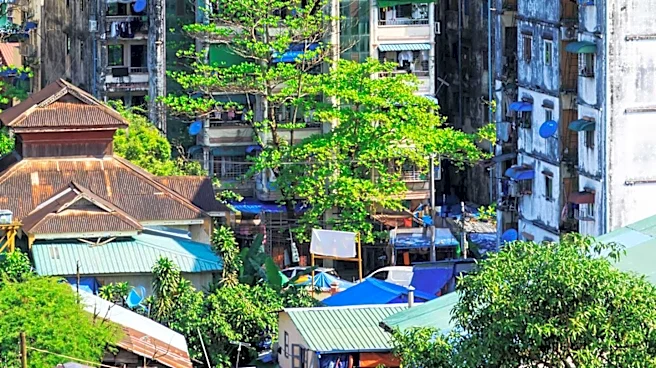
Gentrification, a process involving wealthier individuals purchasing and renovating properties in previously run-down urban areas, is significantly altering city centers. This phenomenon is characterized by the rehabilitation of older homes and streets,
often on a piecemeal basis, by individual households or small groups rather than large organizations. Key drivers of gentrification include the 'rent gap,' where property values fall below their real worth due to neglect, making them attractive for renovation. Reduced commuting costs also play a role, as living closer to city centers offers less time-consuming and stressful travel. Additionally, the 'pioneer' image of edgy neighborhoods attracts creative individuals and young professionals, while government support and changing household compositions (more single or two-person households) further fuel the trend. This process leads to increased property values and the emergence of new businesses like cafes and restaurants.
Why It's Important?
The rise of gentrification holds significant implications for U.S. urban landscapes and their inhabitants. While it can lead to the physical improvement and economic revitalization of inner-city areas, enhancing the physical environment and increasing local tax revenues, it also creates substantial social and economic challenges. The primary concern is the displacement of lower-income residents and local businesses, who are often priced out as property values and rents escalate. This displacement can lead to greater social polarization within cities, as original communities are fragmented and replaced by more affluent populations. The economic benefits, such as new businesses and increased property values, are often not distributed equitably, leading to a loss of affordable housing and cultural identity for long-standing residents. The process can transform the character of neighborhoods, making them less diverse and accessible to a broader range of income levels.
What's Next?
The ongoing trend of gentrification suggests a continued transformation of urban centers across the U.S. Cities may see further development of mixed-use areas, combining residential, retail, and leisure facilities, aimed at attracting more residents and visitors. However, this will likely intensify debates around affordable housing and community preservation. Local authorities and urban planners will face increasing pressure to implement policies that mitigate the negative impacts of gentrification, such as inclusionary zoning or rent control measures, to protect vulnerable populations from displacement. The success of these interventions will determine whether urban revitalization can occur without sacrificing social equity. Additionally, the focus on creating 'cultural and heritage quarters' may continue, aiming to regenerate declining areas by leveraging local history and cultural production, though their effectiveness in delivering broad benefits beyond increased property values remains a subject of critical discussion.
Beyond the Headlines
Beyond the immediate economic and social shifts, gentrification raises profound ethical and cultural questions about the right to the city and the nature of urban development. It highlights a tension between economic growth and social justice, forcing communities to confront who benefits from urban renewal and who bears its costs. The 'pioneer' image, often associated with artists and young professionals, can inadvertently pave the way for more widespread displacement, as these early adopters make neighborhoods desirable for wealthier newcomers. This process can erase the historical and cultural fabric of communities, replacing unique local businesses and gathering places with more generic, upscale establishments. The long-term implications include a potential homogenization of urban culture and a deepening of class divisions, challenging the ideal of diverse and inclusive urban environments. Addressing these deeper implications requires a re-evaluation of urban planning priorities, moving beyond purely economic metrics to consider the social and cultural well-being of all residents.