

What's Happening?
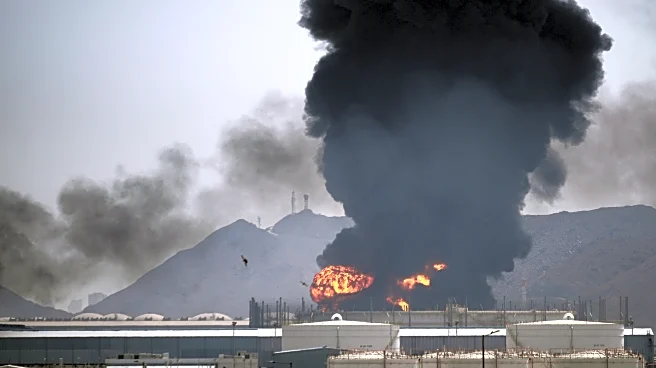
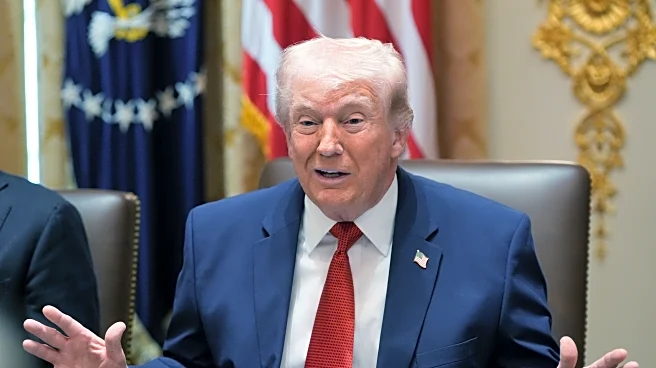
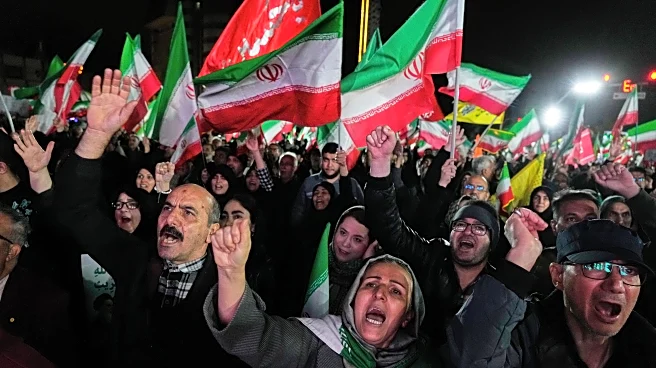
President Trump has extended the deadline for reopening the Strait of Hormuz from five to ten days, citing progress in talks with Iran. This decision comes amidst heightened tensions following Iran's blockade of the strategic waterway, which has led to a rise
in oil prices. The extension was reportedly requested by Iran, and President Trump expressed gratitude for Iran allowing ten Pakistani-flagged oil tankers to leave the Persian Gulf unharmed. The extension also delays a potential U.S. military response, specifically a threat to attack an Iranian power plant, now postponed to April 6.
Why It's Important?
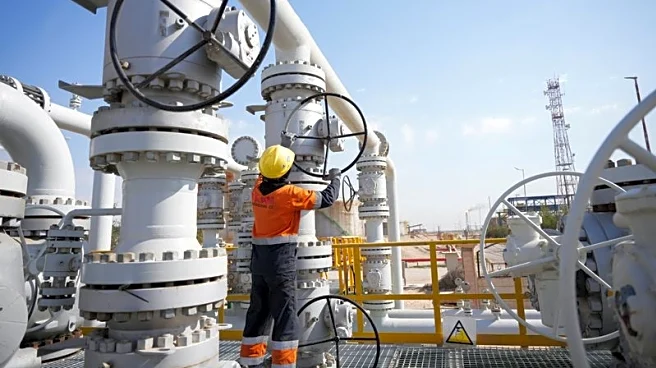
The Strait of Hormuz is a critical chokepoint for global oil shipments, and its blockade by Iran has significant implications for international oil markets and geopolitical stability. President Trump's decision to extend the deadline reflects ongoing diplomatic efforts to resolve the situation without escalating military conflict. The outcome of these talks could impact global oil prices and influence U.S. foreign policy in the Middle East. The situation also tests the U.S.'s ability to manage international crises and maintain alliances, particularly with countries reliant on oil transit through the strait.
What's Next?
The next steps involve continued diplomatic negotiations between the U.S. and Iran, with the potential for easing tensions if talks progress positively. However, the looming deadline of April 6 for a possible military response adds pressure to reach a resolution. Stakeholders, including oil-importing nations and international organizations, will be closely monitoring developments. The U.S. administration may face domestic and international scrutiny depending on the outcome of these negotiations and any subsequent actions.