






What's Happening?
Watermelon Pictures, a Chicago-based production company, has released its award-winning documentary, "Who Killed Alex Odeh?" The film investigates the October 11, 1985, assassination of Palestinian American activist Alex Odeh, who was killed by a pipe
bomb at the American-Arab Anti-Discrimination Committee (ADC) office in Santa Ana, California. Over four decades later, no one has been convicted of his murder. Co-directed by Jason Osder and William Lafi Youmans, the documentary traces connections between the Jewish Defense League (JDL), the ideology of Rabbi Meir Kahane, and politically influential figures in Israel and the United States. Israeli-based journalist David Sheen's independent reporting is central to the investigation. The film includes testimony from a witness identified as Prisoner V and former Santa Ana detective Hugh Mooney, who alleged that U.S. State Department intervention blocked arrest warrants and Israeli intelligence stalled the investigation, allowing suspects to flee to Israel. The documentary highlights that Baruch Ben Yosef, a figure linked to the killing, has lived openly in Israel.
Why It's Important?
The documentary raises significant questions about accountability within the U.S. government and its handling of the investigation into Alex Odeh's murder. The allegations of U.S. State Department interference and Israeli intelligence involvement suggest potential political motivations behind the lack of convictions, impacting the perception of justice for victims of politically motivated violence. The film's exploration of the ideological links between Rabbi Meir Kahane, figures like Baruch Ben Yosef, and contemporary Israeli politicians like Itamar Ben-Gvir underscores the enduring influence of extremist ideologies on both U.S. and international politics. For the Palestinian American community and civil rights advocates, the film represents a continued fight for justice and transparency, highlighting the long-term consequences of unresolved cases of violence against activists. The documentary's call for congressional involvement could potentially reignite official inquiries and pressure for the release of investigative files, impacting U.S. foreign policy considerations and domestic law enforcement practices.
What's Next?
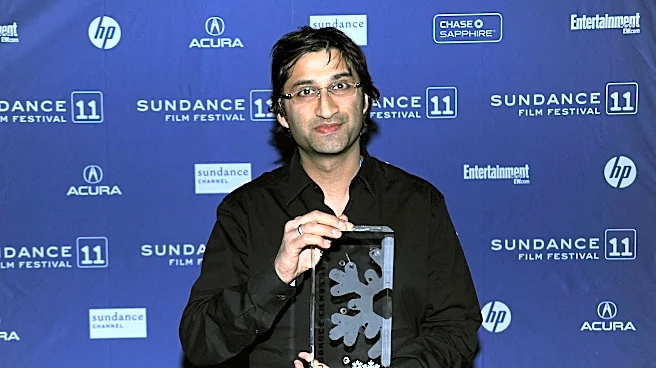
The documentary is currently playing in select theaters in New York, Los Angeles, and Chicago, with additional nationwide screenings planned. The filmmakers, Jason Osder and William Lafi Youmans, hope for congressional intervention to prompt progress in the unsolved case. They suggest that the release of investigative files or action by California authorities could provide a path forward. The film's public release and critical acclaim, including the U.S. Documentary Special Jury Award for Journalistic Excellence at the 2026 Sundance Film Festival, may generate renewed public and political pressure on U.S. authorities to re-examine the case. Potential reactions could include calls from civil rights organizations for greater transparency and accountability from the FBI and State Department regarding their past actions and current investigative status. The continued public discourse around the film could also influence future U.S. policy discussions concerning extremist groups and international cooperation in criminal investigations.
Beyond the Headlines
The unresolved assassination of Alex Odeh, as explored in the documentary, touches upon deeper ethical and legal implications concerning the pursuit of justice in cases with international political dimensions. The film implicitly questions the extent to which geopolitical interests may supersede domestic legal processes and the rights of U.S. citizens. The alleged involvement of foreign intelligence and U.S. government agencies in obstructing justice raises concerns about sovereignty, accountability, and the potential for impunity for perpetrators of violence. Furthermore, the documentary's tracing of extremist ideologies from the past to present-day political influence highlights the long-term societal impact of unaddressed radicalism. The film also serves as a cultural artifact, preserving the memory of Alex Odeh and ensuring that his story, and the broader issues it represents, remain part of the public consciousness, potentially influencing future generations of activists and policymakers on issues of civil rights and international justice.