
What's Happening?
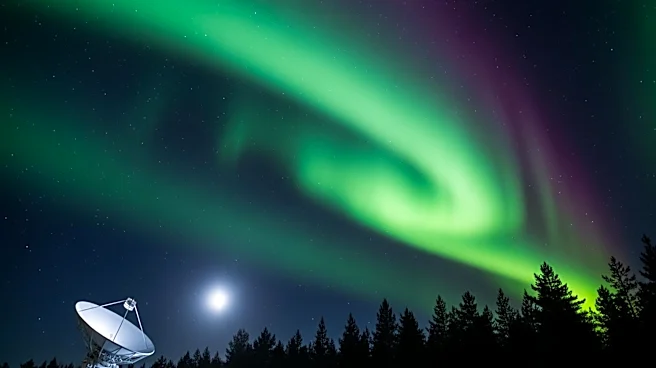
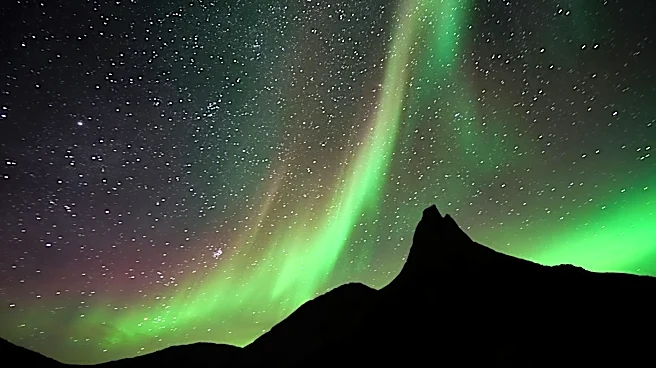
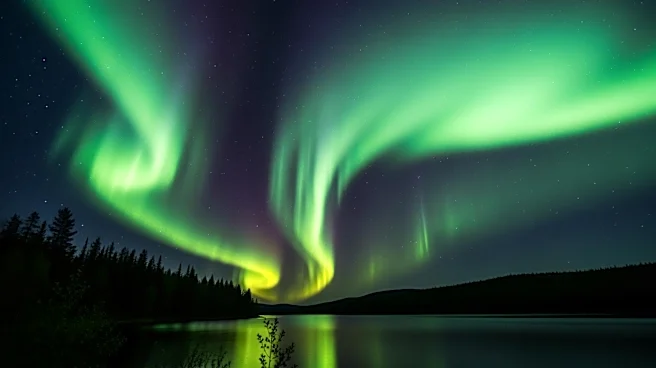
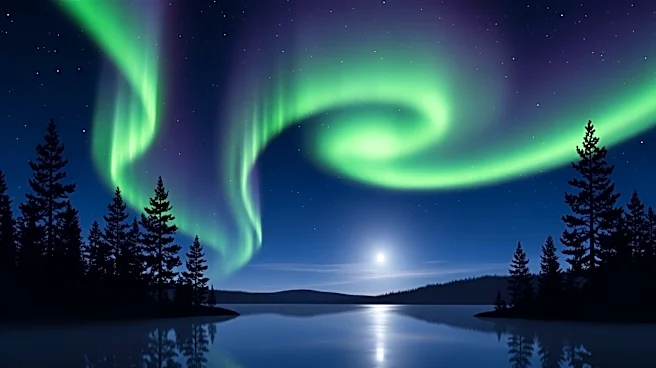
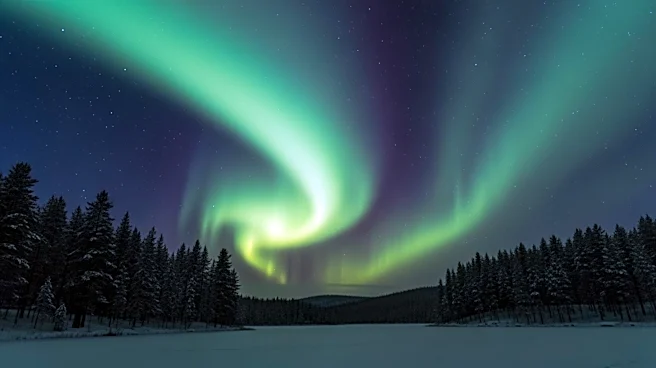
The National Oceanic and Atmospheric Administration (NOAA) has issued a G3, or strong, geomagnetic storm watch, predicting that the Northern Lights could be visible in parts of the northern United States.
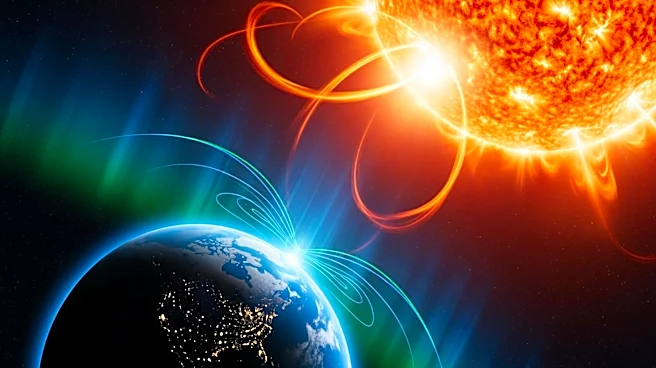
This phenomenon is expected due to the arrival of three coronal mass ejections (CMEs) from the Sun, which are massive bursts of solar material and magnetic fields. The CMEs are anticipated to reach Earth on Thursday, potentially allowing auroras to be seen as far south as Oregon, Washington, Illinois, Massachusetts, and New York. The best viewing times are between 10 p.m. and 2 a.m. in areas with minimal light pollution. NOAA's Space Weather Prediction Center has indicated that the intensity of the storm could reach G4, or severe levels, which might cause voltage problems and disrupt satellite navigation.
Why It's Important?
The potential visibility of the Northern Lights in more southern U.S. states is a rare event, typically only seen in northern regions. This occurrence highlights the impact of solar activity on Earth, particularly in terms of geomagnetic storms. Such storms can affect technological infrastructure, including power grids and satellite operations, posing challenges for industries reliant on these systems. The event also presents a unique opportunity for residents in affected areas to witness a natural phenomenon that is usually confined to higher latitudes. This could increase public interest in space weather and its effects on daily life.
What's Next?
As the geomagnetic storm progresses, NOAA will continue to monitor the situation and provide updates on the storm's intensity and potential impacts. Residents in the affected areas are advised to seek out dark locations away from city lights for the best chance to view the auroras. Additionally, industries that could be impacted by geomagnetic disturbances, such as power and satellite companies, may need to implement precautionary measures to mitigate potential disruptions.