





What's Happening?
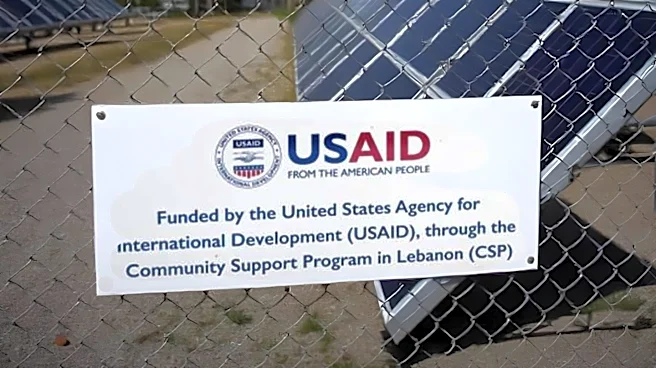
Representative Delia Ramirez (IL-3) has officially endorsed the Alliance For American Leadership's (A4AL) Two-Penny Pledge. This initiative advocates for the allocation of 2% of the federal budget towards foreign aid. The endorsement was highlighted in a press
release by A4AL, a bipartisan non-profit organization focused on restoring American foreign aid. The organization's advocacy efforts include congressional outreach and policy and communication work, aiming to raise awareness about the importance of foreign aid. The endorsement by Representative Ramirez signifies growing support for this financial commitment within the U.S. political landscape, emphasizing the belief that foreign aid plays a crucial role in both national and global affairs. This development comes as A4AL continues to engage with members of Congress to garner support for their pledge.
Why It's Important?
The endorsement of the Two-Penny Pledge by Representative Delia Ramirez is important because it signals a potential shift in the national conversation surrounding U.S. foreign aid. Historically, foreign aid has often faded into the background of national discourse, despite its significant repercussions both domestically and internationally. An increased commitment to foreign aid, as proposed by A4AL, could have a substantial impact on global stability, humanitarian efforts, and U.S. diplomatic influence. For the U.S., a robust foreign aid budget can serve as a tool for promoting democratic values, fostering economic development in partner nations, and addressing global challenges such as health crises and food insecurity. Conversely, cuts to foreign aid funding have been linked to adverse outcomes, including outbreaks of diseases like Ebola and Screwworm, and negative impacts on the livelihoods of American farmers. This endorsement could encourage other lawmakers to consider the strategic benefits of foreign aid, potentially leading to a more stable and predictable funding environment for international development and humanitarian assistance.
What's Next?
Following Representative Ramirez's endorsement, A4AL is likely to continue its advocacy efforts, seeking further congressional support for the Two-Penny Pledge. The organization will probably leverage this endorsement to encourage other representatives and senators to publicly back the initiative, aiming to build a broader bipartisan coalition. This could involve more congressional outreach, public awareness campaigns, and the dissemination of policy briefs detailing the benefits of increased foreign aid. The ultimate goal would be to introduce legislation or influence budget allocations to reflect the 2% commitment. The reaction from other political leaders, businesses, and civil society groups will be crucial in determining the momentum of this initiative. If more lawmakers join Representative Ramirez in endorsing the pledge, it could lead to a more serious consideration of foreign aid funding during future budget negotiations, potentially impacting the U.S.'s role in global development and humanitarian efforts.
Beyond the Headlines
The endorsement of the Two-Penny Pledge by Representative Delia Ramirez touches upon deeper implications regarding the U.S.'s role in global leadership and its ethical responsibilities on the international stage. Beyond the immediate financial commitment, this initiative highlights a philosophical debate about the extent to which the U.S. should invest in global well-being. It underscores the interconnectedness of global challenges, where issues like public health crises, economic instability, and environmental degradation in one part of the world can have ripple effects on U.S. national security and economic interests. The pledge also implicitly challenges the notion that foreign aid is merely charity, reframing it as a strategic investment that can yield long-term benefits for the U.S. by fostering stable international partners and mitigating potential threats. This move could also influence public perception of foreign aid, shifting it from a perceived drain on resources to a vital component of a comprehensive foreign policy strategy, thereby shaping future discussions on international cooperation and global governance.