
What's Happening?
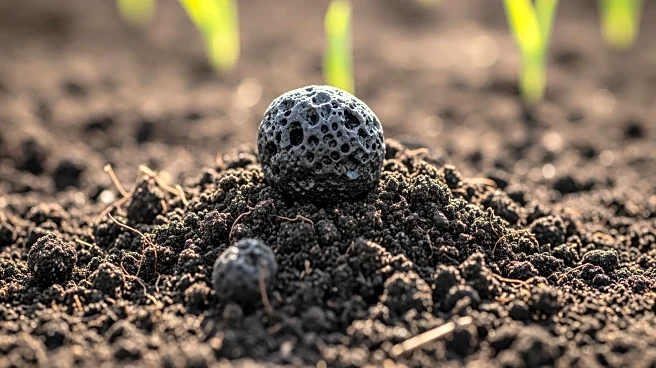
New research indicates that the use of straw-derived biochar could reduce nitrous oxide emissions from China's croplands by up to 50%. Nitrous oxide, a potent greenhouse gas, is primarily released from soils
treated with nitrogen fertilizers. The study, published in Biochar, highlights that biochar's effectiveness in reducing emissions depends on how it is produced and applied, with region-specific strategies being crucial. Researchers used data from over a decade of field studies across China, employing meta-analysis and machine learning to identify optimal biochar application methods. The study found that biochar performs best in regions with moderate to high fertilizer inputs, where nitrous oxide emissions are highest. The research suggests that biochar could also improve soil structure and nutrient efficiency, potentially increasing crop yields and reducing fertilizer use.
Why It's Important?
The findings of this study are significant as they offer a potential solution to one of the most challenging sectors to decarbonize: agriculture. Nitrous oxide is a major contributor to climate change, and reducing its emissions is crucial for meeting global climate targets. The use of biochar not only addresses greenhouse gas emissions but also supports sustainable agriculture by improving soil health and reducing the need for chemical fertilizers. This dual benefit makes biochar an attractive option for policymakers and farmers seeking to balance environmental and agricultural goals. The study's insights into region-specific strategies for biochar application could inform future agricultural practices and policies, promoting more sustainable and climate-smart agriculture.
What's Next?
The study suggests that further research is needed to explore biochar's effects on other greenhouse gases, such as methane and carbon dioxide, and to understand long-term changes as biochar ages in soil. Policymakers and agricultural stakeholders may consider implementing biochar as part of broader climate and agricultural strategies. The study highlights eastern and central provinces in China as promising regions for large-scale biochar deployment, suggesting that targeted projects in these areas could deliver substantial climate benefits. As countries seek scalable and affordable climate solutions, the findings could influence international efforts to reduce agricultural emissions and promote sustainable farming practices.
Beyond the Headlines
The use of biochar in agriculture raises broader questions about the role of agricultural residues in climate change mitigation. By turning crop waste into a valuable resource, biochar offers a way to address both environmental and food security challenges. This approach aligns with circular economy principles, promoting resource efficiency and waste reduction. The study also underscores the importance of tailoring climate solutions to local conditions, highlighting the need for region-specific strategies in addressing global environmental issues. As the agricultural sector continues to seek sustainable practices, biochar could play a key role in transforming how we manage agricultural emissions and soil health.