

What's Happening?
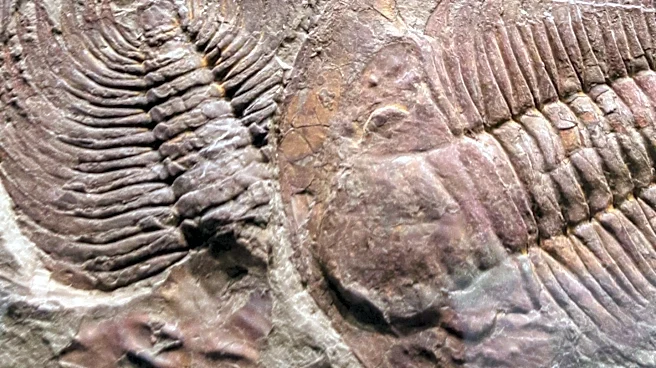
A recent study published in Trends in Ecology & Evolution proposes a novel theory regarding the Cambrian Explosion, a pivotal period approximately 540 million years ago when most major animal groups began to appear. The research, led by scientists from
Flinders University and Karlsruhe Institute of Technology, suggests that the accumulation of excrement, or coprolites, from primitive sea creatures significantly contributed to this evolutionary leap. These fossilized pellets, found in over 35 deposits worldwide, indicate that the development of complex digestive systems and the distribution of organic carbon and nutrients were crucial in fostering marine biodiversity. The study highlights how these ancient faecal deposits played a vital role in the diversification of marine life by enhancing nutrient availability in early ocean ecosystems.
Why It's Important?
This research challenges traditional views on the factors driving the Cambrian Explosion, which has been primarily attributed to rising oxygen levels and other environmental changes. By emphasizing the role of excrement in ancient ecosystems, the study provides a new perspective on how nutrient cycles and digestive evolution contributed to biodiversity. Understanding these processes is crucial for comprehending the dynamics of early life on Earth and the conditions that led to the development of complex ecosystems. This insight could influence current ecological and evolutionary studies by highlighting the importance of nutrient distribution in shaping biodiversity.
What's Next?
The findings may prompt further research into the role of nutrient cycles in evolutionary history, potentially leading to a reevaluation of other significant evolutionary events. Scientists might explore similar mechanisms in different periods to understand how nutrient availability influenced the evolution of life on Earth. Additionally, this research could inspire studies on modern ecosystems, examining how nutrient distribution affects current biodiversity and ecosystem health.
Beyond the Headlines
The study underscores the interconnectedness of biological and environmental factors in evolutionary history. It suggests that seemingly mundane processes, such as the accumulation of excrement, can have profound impacts on the development of life. This perspective may encourage a broader consideration of how small-scale biological processes contribute to large-scale evolutionary changes, offering insights into the complexity of life on Earth.