







What's Happening?
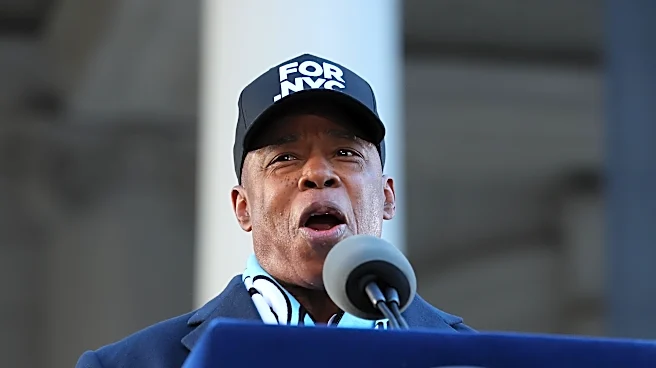
New York City Mayor Zohran Mamdani has signed a bill to ban the city's 160-year-old horse-drawn carriage industry, marking a significant victory for animal rights activists. The legislation, which passed the City Council last month, mandates the industry's
cessation by June 2028. This decision follows decades of advocacy and was notably influenced by a recent incident where an 18-year-old visitor, Romanch Mahajan, was killed after being thrown from a carriage in Central Park. While the horse in that specific incident was uninjured, other horses have died on city streets, with these events often captured in viral videos that fueled activist campaigns. The city plans to buy back medallions from carriage owners and establish a training program for drivers and stable hands, with details expected by April 2027.
Why It's Important?
This ban represents a major shift in how New York City addresses animal welfare within its tourism industry, setting a precedent that could influence other cities with similar operations. For animal rights groups, it validates their long-term efforts and demonstrates the impact of sustained activism, particularly when combined with public awareness generated by incidents like the Central Park crash. Conversely, the Transport Workers Union has strongly opposed the ban, arguing it is unconstitutional and lacks sufficient funding and guarantees for the hundreds of workers who will lose their livelihoods. Union President John Samuelesen has vowed to file a lawsuit, highlighting the potential for significant legal and economic challenges as the city navigates the transition and addresses the concerns of those whose careers are directly impacted by the new law.
What's Next?
The immediate next step involves the city developing concrete plans for the medallion buyback program and job training initiatives, with details anticipated by April 2027. However, the Transport Workers Union is expected to file a lawsuit challenging the constitutionality of the ban, which could lead to prolonged legal battles and potentially delay or alter the implementation timeline. The industry is set to be fully banished by June 2028. The outcome of these legal challenges and the effectiveness of the city's support programs for displaced workers will be crucial in determining the long-term impact of this ban on both the former carriage industry employees and the broader animal rights movement.
Beyond the Headlines
The New York City carriage horse ban highlights a broader societal debate regarding the ethical treatment of animals in entertainment and tourism, and the balance between tradition, economic impact, and animal welfare. The use of viral videos and social media to galvanize public opinion played a significant role in the success of the animal rights movement in this instance, showcasing the power of digital activism. Furthermore, the union's strong opposition underscores the complex socio-economic dimensions of such policy changes, where the pursuit of animal welfare intersects with human employment and economic stability. This case could serve as a blueprint or cautionary tale for other municipalities considering similar bans, emphasizing the need for comprehensive transition plans that address both animal welfare and human livelihood concerns.