





What's Happening?
Congressman Mike Haridopolos, a Space Coast Republican, has publicly praised the House for passing a bill he describes as a ban on congressional stock trading. However, this stance has drawn criticism, particularly regarding the bill's actual scope and
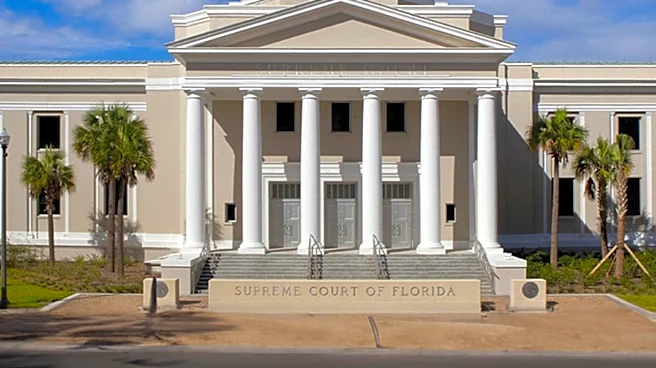
Haridopolos's own history with financial transparency. The 'Stop Insider Trading Act' prohibits members of Congress, their spouses, and children from purchasing individual stocks while in office, but it permits them to retain existing individual stocks, which can be sold with public notice. Critics argue that this provision does not eliminate potential conflicts of interest, as ownership itself can create bias. Furthermore, Haridopolos reportedly voted against a stronger version of the bill that would have included divestment requirements and extended the ban to cabinet members, the Vice President, and the President. This current debate is set against a backdrop of past financial disclosure issues for Haridopolos; while serving in the Florida Senate, he was investigated for omitting required information from his filings between 2004 and 2008, leading to a finding by the Florida Commission on Ethics that he violated the Florida Constitution.
Why It's Important?
The debate surrounding the congressional stock trading ban and Congressman Haridopolos's involvement highlights a critical issue of public trust and ethical governance in the U.S. political system. The ability of lawmakers to trade individual stocks, or even retain them, while privy to sensitive information and voting on legislation that can impact markets, raises concerns about potential insider trading and conflicts of interest. For the public, this situation erodes confidence in the integrity of their elected officials, fostering a perception that personal financial gain might influence legislative decisions. The call for a 'real ban' that includes divestment or genuinely blind trusts reflects a broader societal demand for greater transparency and accountability from those in power. Haridopolos's past financial disclosure violations further complicate this, suggesting a pattern of issues with financial transparency that could undermine his credibility on ethics-related legislation. This ongoing scrutiny affects not only individual politicians but also the perceived legitimacy of legislative processes and the trust citizens place in their government.
What's Next?
The current version of the 'Stop Insider Trading Act' will likely continue to face scrutiny and calls for strengthening, particularly from advocates for more stringent ethics rules. Political leaders, businesses, and civil society groups are expected to maintain pressure for a more comprehensive ban that addresses the loopholes identified, such as allowing members to retain existing stocks. Congressman Haridopolos, as well as other lawmakers, may face continued questions regarding their financial holdings and their voting records on ethics legislation. The issue of financial transparency for elected officials is a recurring theme in U.S. politics, and it is probable that future legislative efforts will aim to close existing gaps. Public discourse will likely focus on whether the current measures are sufficient to prevent conflicts of interest or if more robust regulations, such as mandatory divestment or qualified blind trusts, are necessary to restore public trust in congressional financial dealings.
Beyond the Headlines
The discussion around congressional stock trading bans extends beyond immediate legislative actions, touching upon fundamental ethical and cultural dimensions of public service in the U.S. The core principle at stake is whether public office should be viewed as an opportunity for personal financial advancement or solely as a commitment to public service. The allowance for lawmakers to retain individual stocks, even with restrictions on new purchases, perpetuates a system where the potential for perceived or actual conflicts of interest remains. This situation can contribute to a broader cynicism about politics, where citizens may question the motivations behind legislative decisions. The historical context of financial disclosure issues, as seen in Congressman Haridopolos's past, underscores a persistent challenge in ensuring accountability. Moving forward, the debate could influence long-term shifts in how public officials are expected to manage their personal finances, potentially leading to a cultural expectation of greater financial separation between public service and private investment to uphold the integrity of democratic institutions.