


What's Happening?
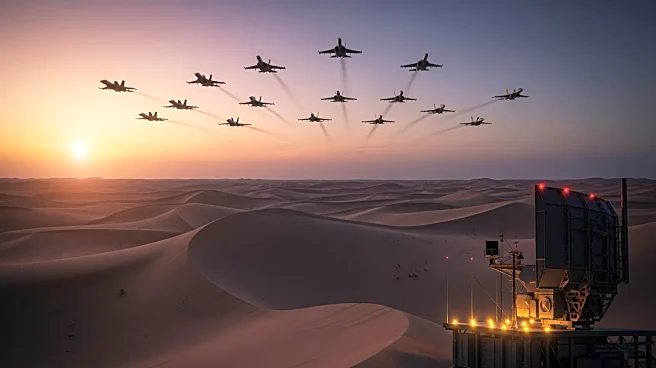
The United States has significantly increased its military presence in the Middle East amid President Donald Trump's considerations of a potential strike on Iran. This buildup includes the deployment of various military assets such as the Lincoln Carrier
Strike Group, which is now stationed in the northern Arabian Sea. The group comprises the USS Abraham Lincoln, three guided-missile destroyers, and a carrier air wing with F/A-18E Super Hornet fighters, F-35C Lightning II fighters, and EA-18G Growler electronic warfare jets. Additionally, the US has positioned air defense systems, including Terminal High Altitude Area Defense (THAAD) and Patriot missile systems, at Al Udeid Air Base in Qatar. Surveillance flights by US drones and reconnaissance aircraft have been ongoing, with operations originating from US bases in Qatar, Bahrain, and beyond. This military escalation follows President Trump's threats of military action if Iran does not agree to a deal regarding its nuclear program.
Why It's Important?
The increased US military presence in the Middle East underscores the heightened tensions between the United States and Iran. This development could have significant implications for regional stability and global oil markets, given the strategic importance of the Strait of Hormuz, a critical chokepoint for global oil shipments. The potential for military conflict raises concerns about the safety of US allies in the region and the possibility of retaliatory actions by Iran. The deployment of advanced military assets also reflects the US's commitment to maintaining a strategic advantage in the region, which could influence diplomatic negotiations and international relations. The situation highlights the ongoing challenges in addressing nuclear proliferation and regional security dynamics.
What's Next?
If diplomatic efforts fail, the US may proceed with military action, which could lead to a broader conflict involving regional and global powers. The international community will likely monitor the situation closely, with potential calls for de-escalation and renewed diplomatic negotiations. The US military's readiness to respond to any Iranian retaliation will be crucial in determining the next steps. Additionally, the impact on global oil prices and supply chains will be a key area of focus for economic stakeholders.