








What's Happening?
A man from Los Angeles County, Derrick Callella, has pleaded guilty to making a fake ransom demand related to the disappearance of Nancy Guthrie, the mother of 'Today' show host Savannah Guthrie. Callella was charged with two counts of telephonic harassment.
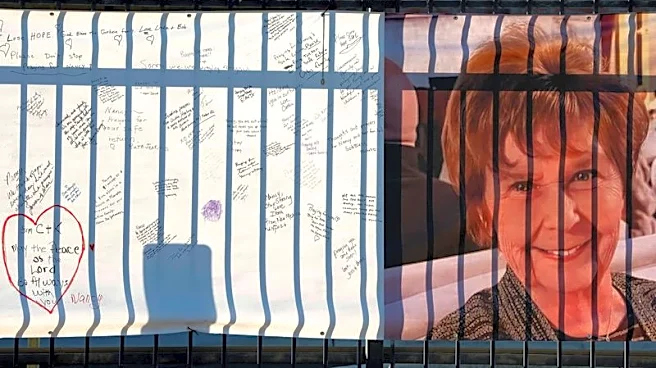
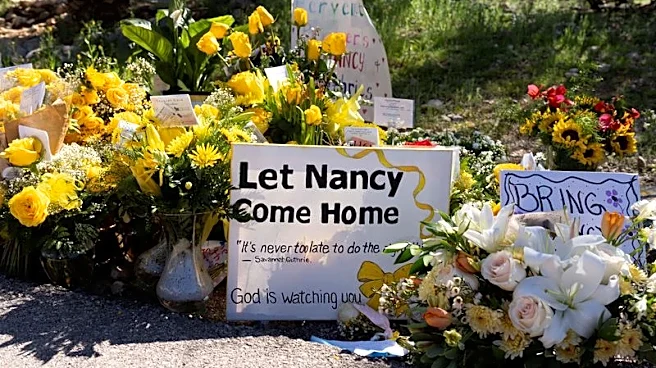
As part of a plea deal in Tucson Federal Court, he will serve five years of probation for each count, concurrently. The charges stem from Callella sending two text messages and making a phone call to the Guthrie family shortly after Nancy Guthrie went missing. Nancy Guthrie, 84, was reported missing from her Tucson-area home on February 1. The FBI released video footage showing a masked individual outside her home, and her blood was found on the porch. Despite these developments, the case remains unsolved. Savannah Guthrie has publicly appealed for information regarding her mother's disappearance.
Why It's Important?
This case highlights the emotional and legal complexities surrounding missing persons cases, especially when public figures are involved. The fake ransom demand added an additional layer of distress for the Guthrie family, complicating the investigation and potentially diverting resources. The plea deal reflects the legal system's approach to handling cases of harassment and false information dissemination, emphasizing the importance of accountability. For the public, this case underscores the impact of misinformation and the need for careful handling of sensitive situations. It also brings attention to the ongoing challenges faced by families of missing persons, who often deal with both emotional turmoil and legal hurdles.
What's Next?
Derrick Callella is scheduled for sentencing in September, where the court will finalize the terms of his probation and any additional conditions, such as the requirement for residential drug treatment. Meanwhile, the investigation into Nancy Guthrie's disappearance continues, with law enforcement seeking new leads. The Guthrie family, supported by public appeals, remains hopeful for a resolution. The case may prompt discussions on improving protocols for handling ransom demands and enhancing support systems for families of missing persons.