




What's Happening?
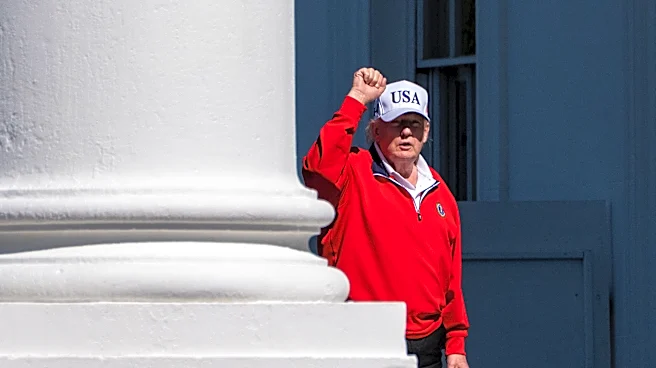
Israeli drone strikes in southern Lebanon resulted in the deaths of 11 people, including a family, following U.S. President Donald Trump's announcement of a de-escalation agreement between Israel and Hezbollah. Despite the announcement, hostilities have
continued, with Hezbollah launching projectiles and drones towards Israeli targets. The ongoing conflict has exacerbated the humanitarian situation in Lebanon, displacing over a million people. The strikes come amid negotiations to extend a ceasefire in the U.S.-Israeli conflict with Iran, with Iran demanding an end to hostilities in Lebanon as part of any agreement.
Why It's Important?
The continued violence highlights the fragility of ceasefire agreements in the region and the complex geopolitical dynamics involving Israel, Hezbollah, and Iran. The conflict poses significant humanitarian challenges, with large-scale displacement and civilian casualties. It also complicates U.S. diplomatic efforts to mediate peace in the region, potentially affecting U.S. foreign policy and its relations with Middle Eastern countries. The situation underscores the challenges of achieving lasting peace in a region marked by longstanding political and military tensions.
What's Next?
Further diplomatic efforts are expected as talks between Israel and Lebanon continue in Washington. The outcome of these negotiations could influence the broader regional stability and the future of U.S.-Iran relations. The international community may increase pressure on the involved parties to adhere to ceasefire agreements and address humanitarian needs. The potential for further escalation remains if diplomatic solutions are not reached.