







What's Happening?
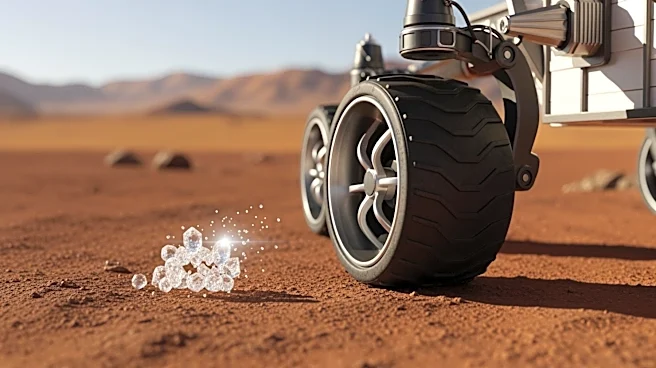
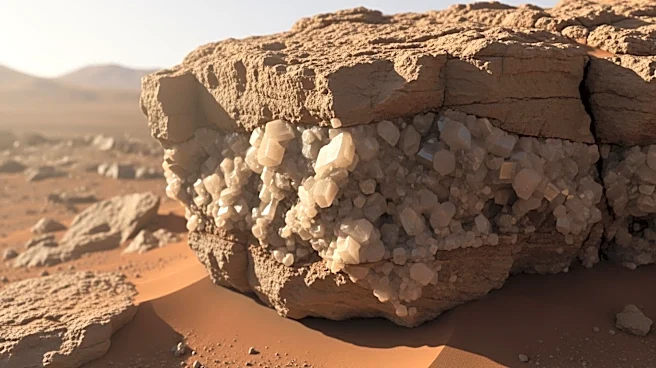
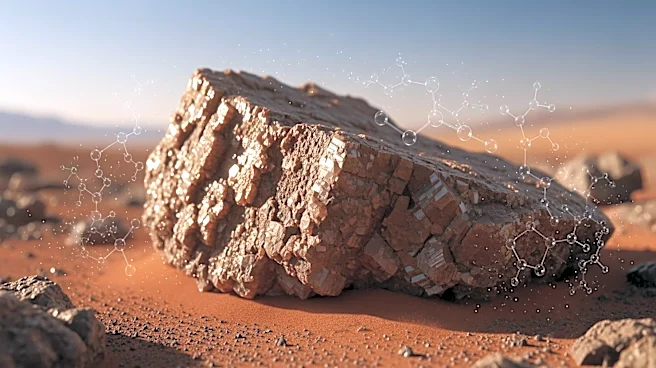
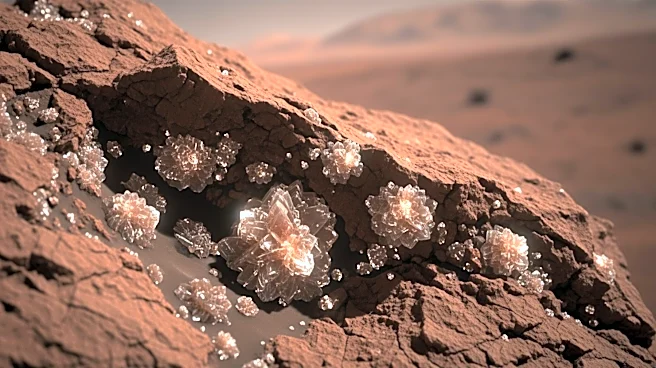
NASA's Curiosity rover has made a significant discovery on Mars, uncovering a rock that contains seven new organic molecules, marking the most diverse collection of such compounds ever found on the planet. The rock, drilled by Curiosity in 2020, has been
confirmed to contain organic molecules that include carbon, a key element for life. While it remains uncertain whether these molecules were formed through biological or geological processes, the findings bolster the theory that ancient Mars had conditions conducive to life. The discovery was made using the Sample Analysis at Mars (SAM) instrument, which analyzed the rock's composition. The molecules found include nitrogen heterocycle and benzothiophene, which are significant as they could have contributed to life-friendly chemistry on Mars.
Why It's Important?
This discovery is crucial as it adds to the growing body of evidence that ancient Mars may have been hospitable to life. The presence of organic molecules, especially those containing carbon, suggests that the Martian environment had the right chemistry to support life in the past. This finding could have significant implications for our understanding of the potential for life beyond Earth. It also highlights the importance of continued exploration and study of Mars, as these organic compounds have been preserved despite billions of years of exposure to radiation, which typically breaks down such molecules. The discovery could guide future missions in the search for past life on Mars.
What's Next?
The findings from Curiosity's analysis will likely lead to further studies and missions aimed at understanding the potential habitability of Mars. Scientists may focus on other areas of the planet that could have similar conditions to those where the organic molecules were found. Additionally, the discovery could influence the design of future missions, including those that aim to return samples to Earth for more detailed analysis. The ongoing research will continue to explore the possibility of life on Mars and may eventually lead to breakthroughs in our understanding of life's potential beyond Earth.