






What's Happening?
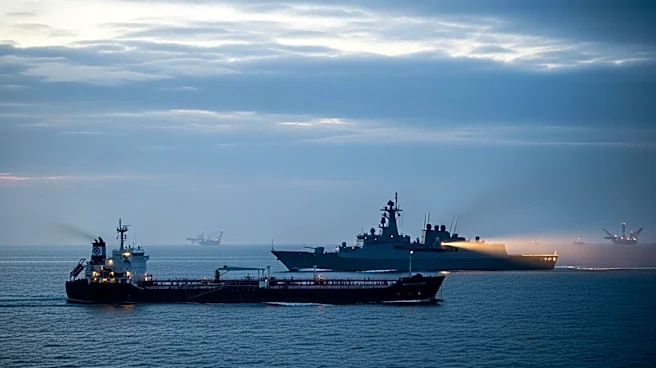
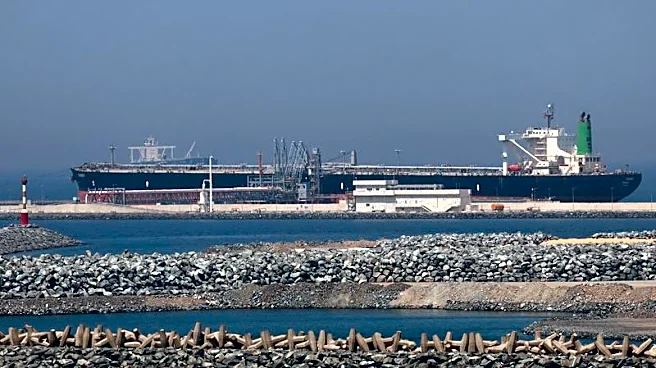
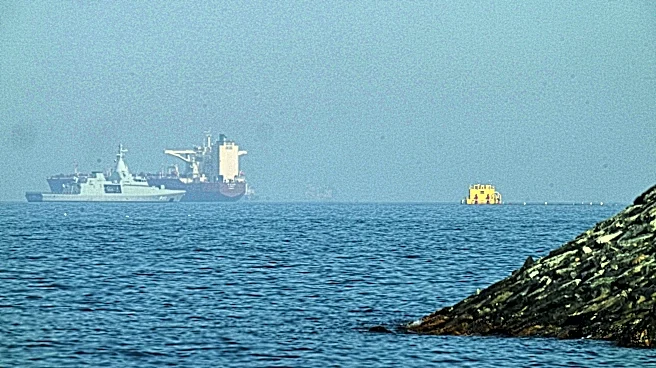
Saudi Arabia's Aramco Trading Co. and the UAE's Adnoc have been moving crude oil tankers through the Strait of Hormuz despite Iran's effective closure of the waterway. This action comes amid heightened tensions and conflict in the region, with Iran seizing
vessels and the U.S. military responding to Iranian threats. Although the total oil flow is significantly reduced, these companies are taking risks to ensure some supply reaches global markets. The transits often occur with transponders turned off to avoid detection, highlighting the precarious nature of these operations.
Why It's Important?
The Strait of Hormuz is a critical chokepoint for global oil supply, and its closure has exacerbated the global supply crisis. The actions of Aramco and Adnoc underscore the lengths to which companies will go to maintain oil flow, reflecting the strategic importance of the strait. The situation has implications for global oil prices and energy security, as disruptions in the strait can lead to significant economic impacts worldwide. The ongoing tensions also highlight the geopolitical complexities of the region, with potential consequences for international relations and trade.
What's Next?
As tensions continue, the situation in the Strait of Hormuz remains volatile. Companies may continue to take risks to navigate the strait, but the potential for further conflict or escalation remains high. International stakeholders, including governments and energy companies, will likely monitor the situation closely, with possible diplomatic efforts to de-escalate tensions. The global community may also explore alternative routes or strategies to mitigate the impact of disruptions in the strait on oil supply and prices.