





What's Happening?
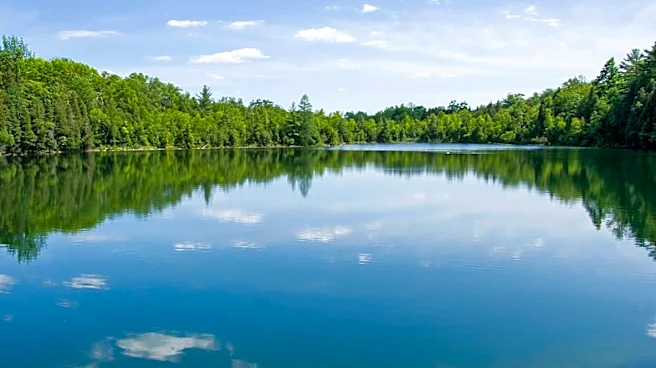
Smallwood Lake in Michigan has begun refilling, six years after a catastrophic dam disaster led to its drawdown. This significant milestone follows the completion of a $50.2 million rebuild of the Smallwood Dam. The refill process, which commenced on August
4, is projected to take between eight and ten weeks, contingent on weather conditions. This effort aims to restore the lake for 721 waterfront properties. The Four Lakes Task Force, responsible for the wider restoration of Michigan's Four Lakes system, confirmed that work at Smallwood Dam has progressed sufficiently to allow the lake to start filling, even as construction continues at other dam sites. Before the refill, crews finalized critical work, including the installation of pipes and electrical systems, and reinforced areas around the dam's main and backup water routes. While Smallwood Lake is now in the refilling stage, other dams in the system, such as Secord and Edenville, are still under construction, with Secord Dam experiencing a delay in its planned completion due to a faulty gate part.
Why It's Important?
The refilling of Smallwood Lake marks a crucial step in the recovery of a community significantly impacted by the 2020 dam disaster. For the 721 waterfront property owners, this signifies the return of their lakefront amenities, potentially restoring property values and recreational opportunities that were lost. The $50.2 million investment in the Smallwood Dam rebuild underscores the substantial economic and social costs associated with infrastructure failures and the commitment required for recovery. This project also highlights the broader challenges faced by aging infrastructure across the U.S. and the importance of robust maintenance and modernization efforts. The delays encountered at Secord Dam, despite quality checks, illustrate the complexities and unforeseen obstacles inherent in large-scale civil engineering projects. The Four Lakes Task Force's initiatives, including property owner training sessions on natural shoreline restoration and a cost-share program, demonstrate a comprehensive approach to not only rebuilding physical infrastructure but also fostering environmental stewardship and community resilience.
What's Next?
The refill of Smallwood Lake will continue over the next eight to ten weeks, with residents and the Four Lakes Task Force monitoring the process. Concurrently, construction will proceed at Secord and Edenville Dams. The planned completion date for Secord Dam has been pushed back to November, with the lake refill still anticipated to begin on April 15, 2027. Work at Edenville Dam involves preparing for further construction on its main water control structures. The Task Force will host a public information session on October 7 to provide updates on the construction progress at all three dams, project finances, and details regarding the lake refill process. Property owners will also have opportunities to participate in training sessions on natural shoreline building and apply for the cost-share program for shoreline improvements. These ongoing efforts aim to fully restore the Four Lakes system, bringing long-term environmental and economic benefits to the affected communities.
Beyond the Headlines
The Smallwood Lake dam disaster and subsequent rebuild project offer a microcosm of the broader infrastructure challenges facing the United States. Beyond the immediate economic impact and the restoration of recreational value, this event highlights the critical need for proactive infrastructure management and investment to prevent future catastrophes. The community's engagement, facilitated by the Four Lakes Task Force, in both the rebuilding process and environmental initiatives like natural shoreline restoration, demonstrates a shift towards more sustainable and resilient community development. The incident also raises questions about regulatory oversight and the adequacy of existing frameworks for dam safety. The long-term implications extend to how communities adapt to and mitigate the risks associated with climate change and extreme weather events, which can exacerbate infrastructure vulnerabilities. The project serves as a case study for other regions grappling with similar issues, emphasizing the importance of collaborative efforts between government agencies, private entities, and local communities in addressing complex infrastructure and environmental challenges.