
What's Happening?
Scott Jennings, a conservative pundit and former senior aide in the George W. Bush administration, has emerged as the leading candidate to replace Karoline Leavitt as White House press secretary. Reports indicate that Jennings has been holding secret meetings
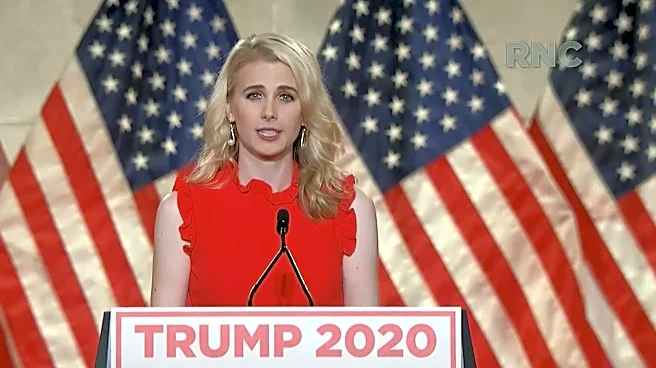
with Susie Wiles, President Trump's chief of staff, to discuss the role even before Leavitt's official announcement of her departure. Three sources familiar with the selection process confirmed that Wiles considers Jennings her preferred candidate and that they 'speak often.' Their latest meeting reportedly took place at Morton's steakhouse in Washington D.C. The White House has officially denied that any meetings between Jennings and Wiles have occurred. Insiders suggest that President Trump has expressed a preference for another woman to fill the position, with Natalie Harp and Alina Habba among other potential candidates.
Why It's Important?
The selection of a White House press secretary is a critical decision that significantly impacts the administration's public image and communication strategy. The press secretary serves as the primary spokesperson for the President, shaping narratives and conveying policy to the public and media. If Scott Jennings, a known conservative commentator, is appointed, it could signal a more aggressive and ideologically aligned communication approach from the White House. His background as a 'rabid defender' of President Trump suggests a potential for heightened confrontation with the media. The reported clandestine meetings and the White House's denial raise questions about transparency and internal dynamics within the administration. Furthermore, President Trump's stated preference for a female press secretary introduces an element of uncertainty and potential internal conflict regarding the final decision, highlighting the complex political considerations involved in such a high-profile appointment.
What's Next?
The process of selecting the next White House press secretary is ongoing, with multiple candidates reportedly vying for the position. While Scott Jennings appears to be a strong contender, President Trump's preference for a female appointee could lead to further consideration of other candidates like Natalie Harp or Alina Habba. The coming weeks will likely see continued speculation and potential leaks regarding the selection process. The eventual announcement of the new press secretary will be closely watched by political observers and the media, as it will offer insights into the administration's future communication strategy. The chosen individual will immediately face the challenge of navigating a highly scrutinized role, managing media relations, and effectively communicating the President's agenda.
Beyond the Headlines
The process of selecting a White House press secretary often reveals deeper insights into the internal power struggles and strategic priorities of an administration. The reported 'secret meetings' and the White House's denial, coupled with President Trump's stated preference for a specific demographic for the role, underscore the highly political and image-conscious nature of such appointments. This situation highlights how personal relationships and perceived loyalty can heavily influence key staffing decisions, potentially overshadowing traditional qualifications. The 'Apprentice-like' atmosphere described by insiders, with candidates 'climbing over one another' for the President's attention, suggests a highly competitive and potentially chaotic selection process. This dynamic can impact the effectiveness and stability of the communications team, ultimately affecting the administration's ability to convey its message coherently and credibly to the American public.