



What's Happening?
The U.S. House of Representatives has passed the ALERT Act, an aviation safety bill aimed at preventing midair collisions like the one that occurred near Ronald Reagan Washington National Airport in January 2025. The collision involved an American Airlines
jet and an Army Black Hawk helicopter, resulting in 67 fatalities. The bill requires all aircraft, including military planes, to install ADS-B In systems by 2031, with some exceptions. The National Transportation Safety Board (NTSB) supports the bill, stating it addresses their recommendations. However, victims' families and some lawmakers argue the bill does not go far enough in ensuring aviation safety.
Why It's Important?
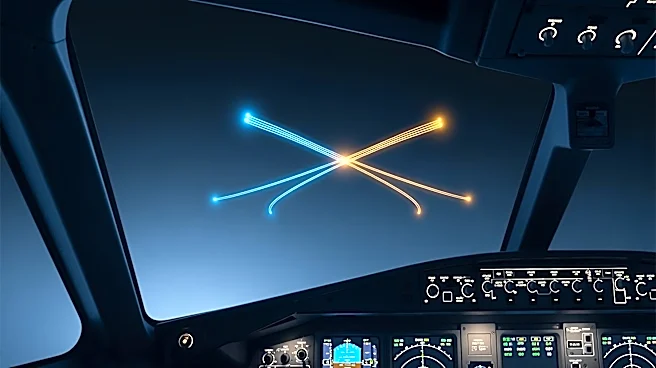
The passage of the ALERT Act is a critical step towards enhancing aviation safety by mandating advanced collision-avoidance technology on aircraft. This legislation addresses systemic issues identified by the NTSB, which have been linked to past aviation accidents. The bill's requirements could lead to increased safety for passengers and crew by providing pilots with more precise information about nearby aircraft, potentially preventing future tragedies. However, the bill's critics, including victims' families and some senators, argue that the technology is not yet market-ready and that the bill lacks strict timelines for implementation, which could delay its effectiveness.
What's Next?
The ALERT Act will now move to the Senate for consideration, where it may face further debate and potential amendments. The Senate has previously supported a different version of the bill, known as the ROTOR Act, which also focuses on aviation safety but includes different provisions. Lawmakers will need to reconcile the differences between the two bills to create a final piece of legislation. Additionally, the implementation of the required technologies will need to be monitored to ensure compliance and effectiveness in improving aviation safety.