





What's Happening?
The iconic Boblo Boats, the steamships Columbia and Ste. Claire, played a significant role in shaping tourism on Lake Erie and providing recreation for Metro Detroiters for decades. Built in 1902 and 1910 respectively, these vessels were capable of carrying
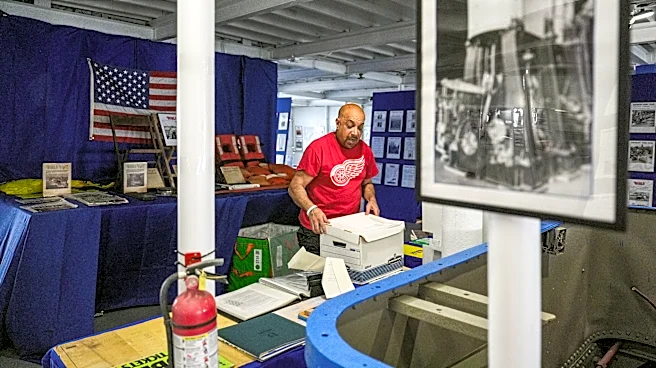
over 2,500 passengers each and transported as many as 800,000 visitors annually to Boblo Island during its peak in the 1960s and 1970s. Boblo Island, originally named Bois Blanc, was an amusement park located 18 miles downriver from downtown Detroit. The journey to the island was a key part of the experience, offering a cool breeze and scenic views, especially before widespread air conditioning. The ships served as a vital link for leisure travel, connecting Detroiters to the island's attractions. The Boblo Island Amusement Park eventually closed on September 30, 1993, marking the end of an era for these beloved steamships. The Ste. Claire later suffered a fire in 2018 while docked in Detroit, and the Columbia underwent a $1.6 million hull restoration and is now docked in Buffalo, serving as a cultural and educational venue.
Why It's Important?
The legacy of the Boblo Boats is important as it highlights a significant period in American leisure and transportation history, particularly for the Great Lakes region. These steamships were instrumental in the development of tourism destinations like Boblo Island, Cedar Point, and Put-in-Bay, making them accessible to the burgeoning middle class. The shift from primarily freight-focused steamships to those designed for passenger comfort and entertainment reflects broader societal changes, including increased disposable income and shorter work weeks. The boats provided an escape from crowded cities, fostering family traditions and creating lasting memories for generations of Detroiters. Their story also illustrates the evolution of transportation, as personal automobiles eventually led to a decline in steamboat popularity for leisure travel. The preservation efforts for the Columbia, transforming it into a cultural venue, underscore the historical and sentimental value these vessels hold, ensuring their story continues to be told.
What's Next?
The SS Columbia, after its extensive hull restoration, is currently docked in the Buffalo River at Silo City, where it is serving as a cultural and educational venue. The long-term plan for the Columbia involves its eventual relocation to the Hudson River in New York, where it is intended to carry passengers once again in the coming years. This move signifies a new chapter for the historic vessel, transitioning from its Great Lakes roots to a new role on the East Coast. The future of the Ste. Claire, which was severely damaged by fire in 2018, remains uncertain, though it has been moored at Riverside Marina in Detroit. Efforts to preserve and repurpose such historic vessels often involve significant fundraising and logistical challenges, relying on community support and historical preservation groups. The ongoing work on the Columbia suggests a commitment to maintaining these tangible links to America's past maritime and leisure industries.
Beyond the Headlines
The story of the Boblo Boats extends beyond mere transportation, touching upon the cultural and social fabric of American life in the 20th century. These steamships were not just vessels; they were symbols of summer, freedom, and family outings, deeply embedded in the collective memory of Metro Detroiters. The decline of the Boblo Boats and Boblo Island reflects broader shifts in leisure activities and urban development. As personal automobiles became more prevalent, the allure of a day-long boat trip to an island amusement park waned in favor of more accessible, land-based entertainment options. The efforts to restore and repurpose the Columbia highlight a growing appreciation for industrial heritage and the importance of preserving historical artifacts that tell a story about American ingenuity and social evolution. The transformation of the Columbia into a cultural and educational venue underscores a commitment to using these historical assets to engage new generations with the past, fostering a connection to maritime history and the social changes it represents.